

Should Your First Wholesale Sofa Range Use Neutral or Accent Colors?
Assign each color to a sales role—core stock, display traffic or made to order—then test the first mix with real sell-through evidence instead of personal preference.

The safest first sofa order is not automatically all beige, and the most eye-catching showroom color is not automatically a good inventory color. A color earns its place by doing a defined job in the assortment.
For a new wholesale range, separate colors into three roles: core stock that supports repeat selling, display colors that make the collection visible, and made-to-order colors that expand choice without forcing every option into inventory. Use the same confirmed sofa model, fabric construction and sales channel when comparing those roles.
Why is “choose the most popular sofa color” the wrong first-order question?
A color can attract attention without converting into repeat orders. It can also sell well in one room style, market or channel and underperform in another. A general popularity claim does not tell a buyer whether the color belongs in stock, on display or only in a custom offer.
The first order also mixes several decisions: which model to launch, how many units to hold, which fabric to use and which color to show in photography. If those decisions are not separated, a weak result may be blamed on the color even when the model, price, lead time or presentation caused the problem.
Start with the exact sellable configuration and the customer group for that range. Then assign every proposed color a role and a test condition. The question becomes what job this color must perform, not whether the buying team likes it.
Practice source note. Chinese consumer discussions repeatedly compare neutral safety with accent impact, but they usually describe one home rather than a wholesale assortment. Use those discussions to frame questions, not to claim universal demand. Practice sources 01, 02, 05 and 06.
Which sofa colors belong in core stock, display or made-to-order roles?
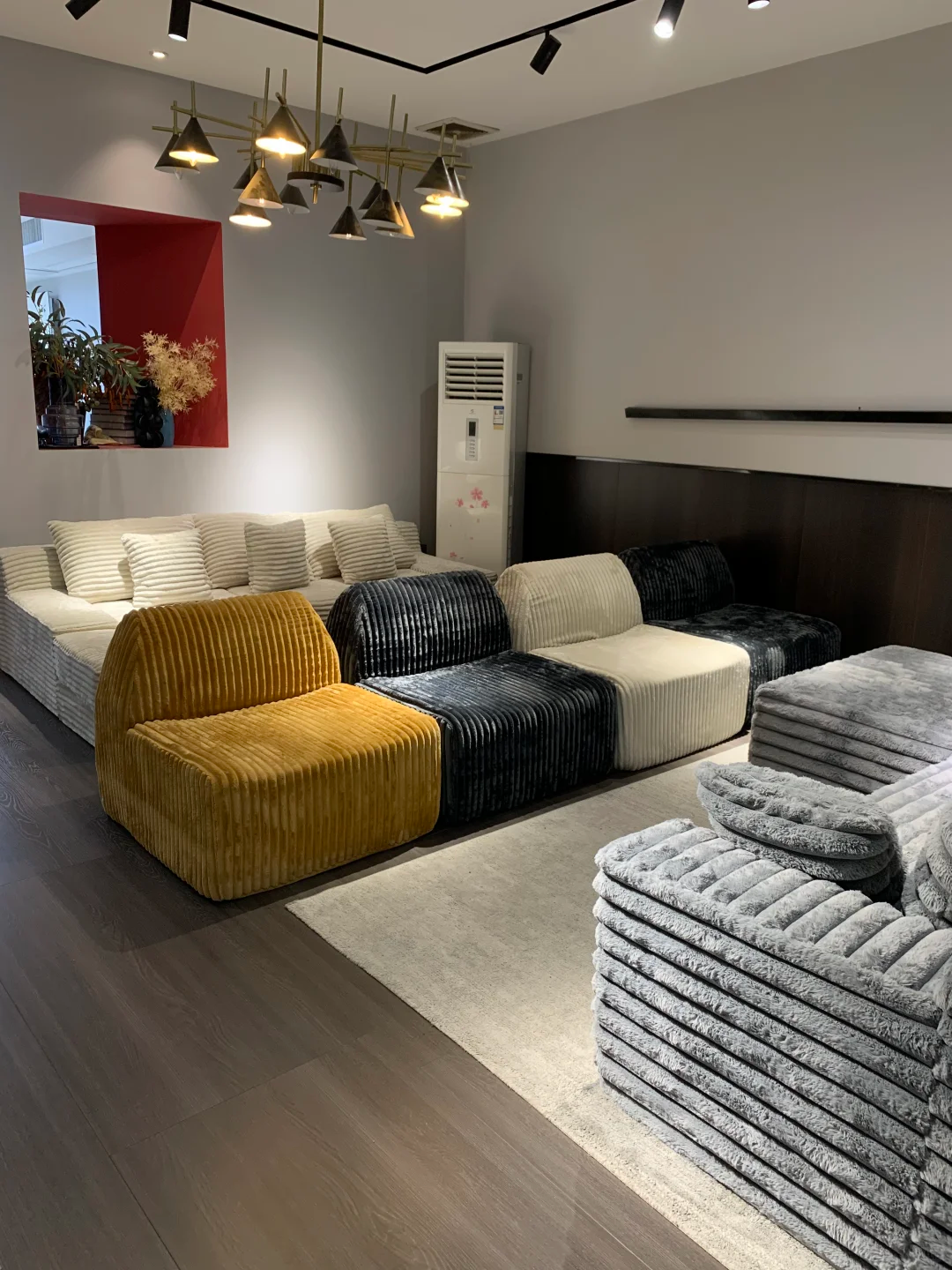
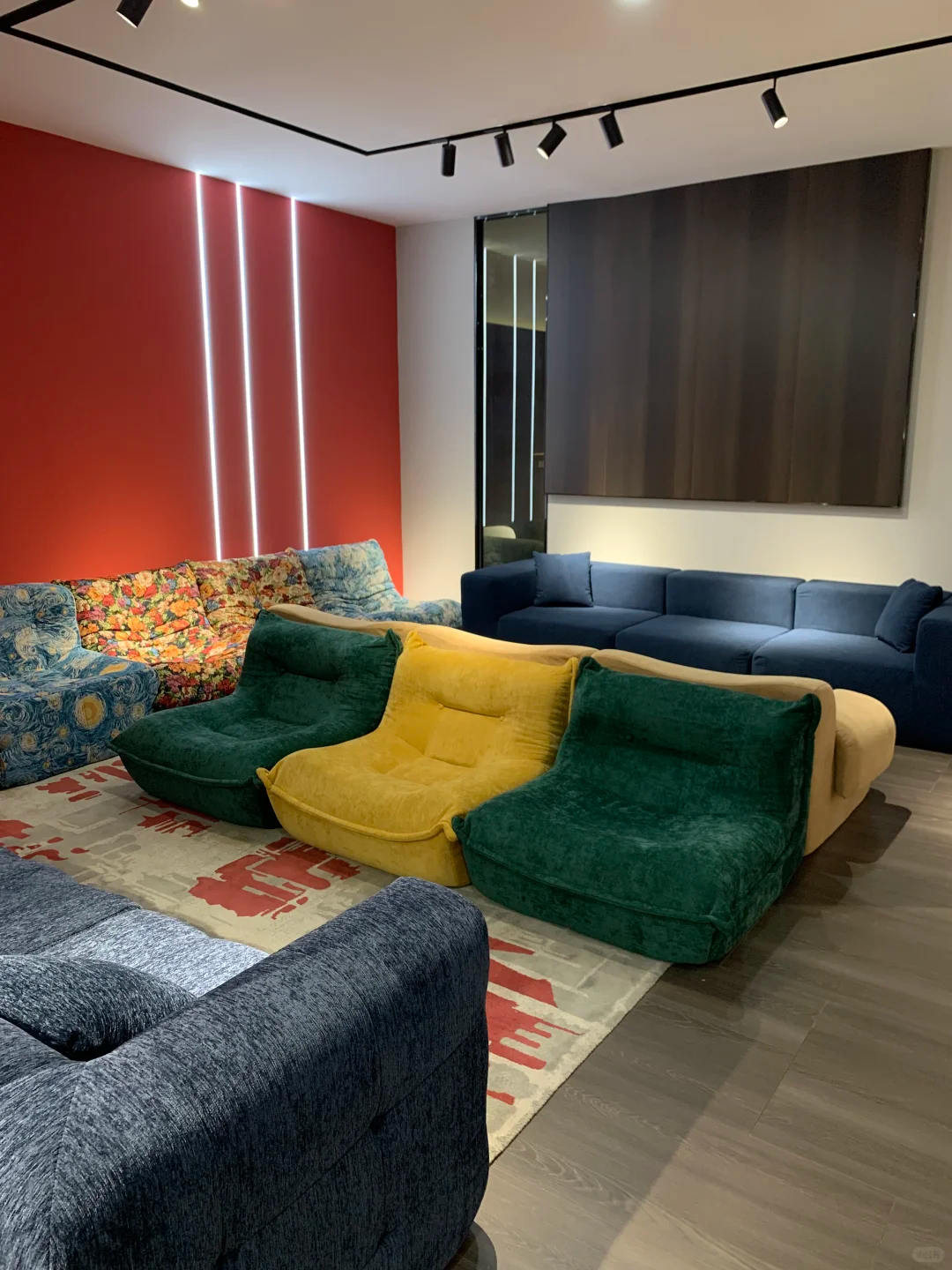
Core-stock colors should cover the combinations the retailer expects to replenish repeatedly. They need a confirmed fabric code, reliable production status and a clear fit with the rooms and channels the business actually serves. Neutral does not mean interchangeable: warm beige, cool grey and brown can behave differently beside floors, walls and timber finishes.
Display colors have a different job. A brighter blue, green, orange or patterned option may help the range stand out in a showroom, campaign or social feed. Keep the display quantity separate from the replenishment quantity and state whether customers can buy the display color from stock or only order it after seeing the sample.
Made-to-order colors extend choice without pretending every swatch is inventory. Publish the applicable model, fabric, minimum quantity, lead-time basis and approval route. Do not list a color as available until the factory confirms the exact material and production conditions for that sofa.
| Color role | Opening-order treatment | Evidence to review | Next decision |
|---|---|---|---|
| Core stock | One or two confirmed neutrals with replenishment quantity | Orders, repeat inquiries, cancellations and returns | Keep, increase, reduce or replace |
| Display traffic | One controlled showroom or campaign sample | Qualified inquiries, swatch requests and conversion to deposits | Move to core, keep display-only or remove |
| Made to order | No open stock unless separately approved | Confirmed fabric availability, MOQ and lead-time basis | Continue, restrict by channel or discontinue |
Practice source note. Public design posts use neutral bases and brighter focal colors for different visual jobs. The wholesale method converts that distinction into core-stock, display and made-to-order roles. Practice sources 02, 03, 07 and 10.
How many neutral sofa colors should you keep in the first core range?
Choose the smallest set that covers genuinely different customer needs. Two neutrals may be useful when one is warm and one is cool, or when light and dark options serve different maintenance expectations. Five nearly identical beiges can split demand without making the range easier to buy.
Compare each candidate against the same room references: floor tone, wall tone, timber or metal finishes and the channel’s typical photography. Record the actual fabric code and approved sample. A name such as oatmeal, sand or stone cannot replace a physical comparison because suppliers and screens use those names differently.
If no channel data exists, do not convert uncertainty into a large opening order. Choose one or two defensible core colors, keep the replenishment decision open and review the first period’s inquiries, samples, orders and returns before adding another stock neutral.
Practice source note. Grey, beige, brown and off-white appear often in public buying advice, but shade names and room conditions vary. Keep the actual codes and samples attached to each stock decision. Practice sources 01, 05, 06 and 08.
When is an accent sofa color worth putting on display?
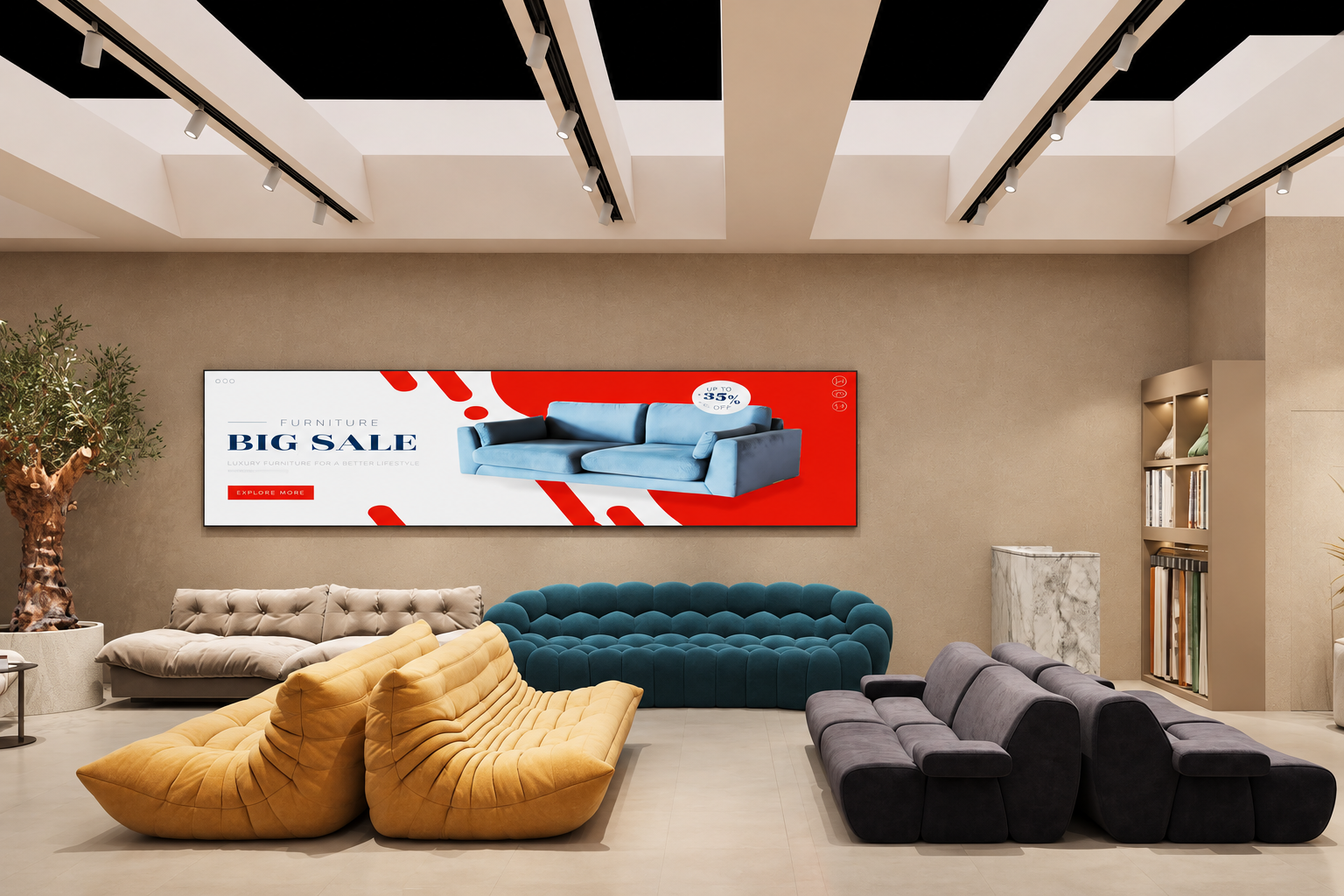
Use an accent color when it supports a specific collection story, target customer or campaign and the display environment can present it accurately. The color should make the model easier to notice without causing buyers to misunderstand what is stocked or what the photographed fabric will look like in another light.
A display color is more useful when the same sofa can also be shown with the core swatches nearby. Customers can then separate the shape they like from the color they may order. Keep the display label, product page and sales script aligned on whether that exact color is ready stock, replenishable or made to order.
Do not treat an accent color as evidence that the whole range needs the same stock depth. A single showroom unit, campaign sample or controlled channel test can perform the attention role while the repeat-selling colors carry the inventory role.
Practice source note. Orange, yellow, blue and green sofas are commonly presented as focal points. Treat visual attention as a reason to test a display, not as proof of repeat demand. Practice sources 02, 03, 04 and 07.
How do you test a bright sofa color without creating excess stock?
Define the test before ordering. Name the model, color code, channel, display location, test quantity, review period and decision rule. Track inquiries, swatch requests, deposits, completed orders, cancellations and return reasons separately from views or likes.
Use a small display or pre-order test when demand is uncertain. Give sales teams an approved neutral alternative so they can record whether customers rejected the color, preferred another shade or rejected the sofa for a different reason. Without that distinction, the test produces noise rather than a buying decision.
At the review point, choose one of four outcomes: move the color into core stock, keep it as a display or made-to-order option, repeat the test with one controlled change, or remove it. Do not keep buying a weak color simply because the first sample photographed well.
| Test field | What to record |
|---|---|
| Identity | Model, revision, fabric code and exact color reference |
| Scope | Channel, location, quantity and review period |
| Attention | Views, visits and qualified inquiries, kept separate from orders |
| Commercial result | Swatch requests, deposits, completed orders, cancellations and returns |
| Decision | Core stock, display-only, made to order, repeat test or remove |
Practice source note. Social engagement shows that a color can attract interest. It does not show order completion, return risk or replenishment demand, so the buyer still needs a bounded commercial test. Practice sources 02 to 04.
How should fabric texture, lighting and screens change the color decision?
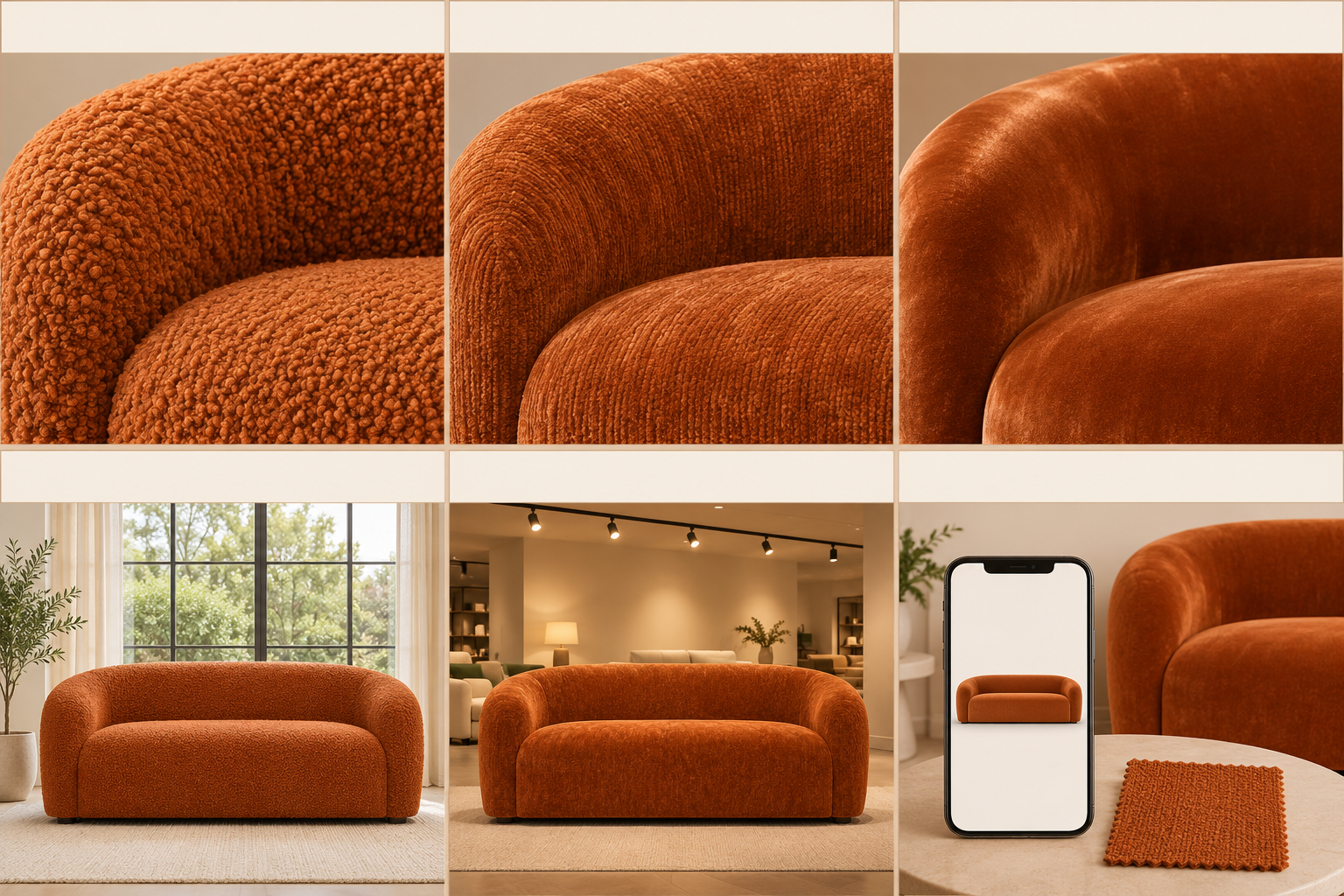
Approve color on the actual fabric construction used for the sofa. Bouclé, chenille, velvet and flat weave reflect light differently, so one dye direction or reference can appear lighter, darker or more varied after upholstering the complete form. A small digital swatch cannot show every seam, curve and shadow.
Review the approved sample under the lighting conditions relevant to the channel: showroom light, daylight and the controlled light used for product photography. Keep camera settings and post-processing from silently turning one approved color into several customer-facing versions.
If the fabric, pile direction, backing or supplier lot changes, reopen the color approval for the affected model. A familiar color name does not prove that the finished sofa will match the earlier sample or the images already used by the retailer.
Practice source note. Public answers note that room surfaces, sunlight and the sofa style change how a color is perceived. The article turns that observation into a sample and lighting approval step. Practice sources 05, 06 and 08.
What should the buyer record before approving the first sofa color mix?
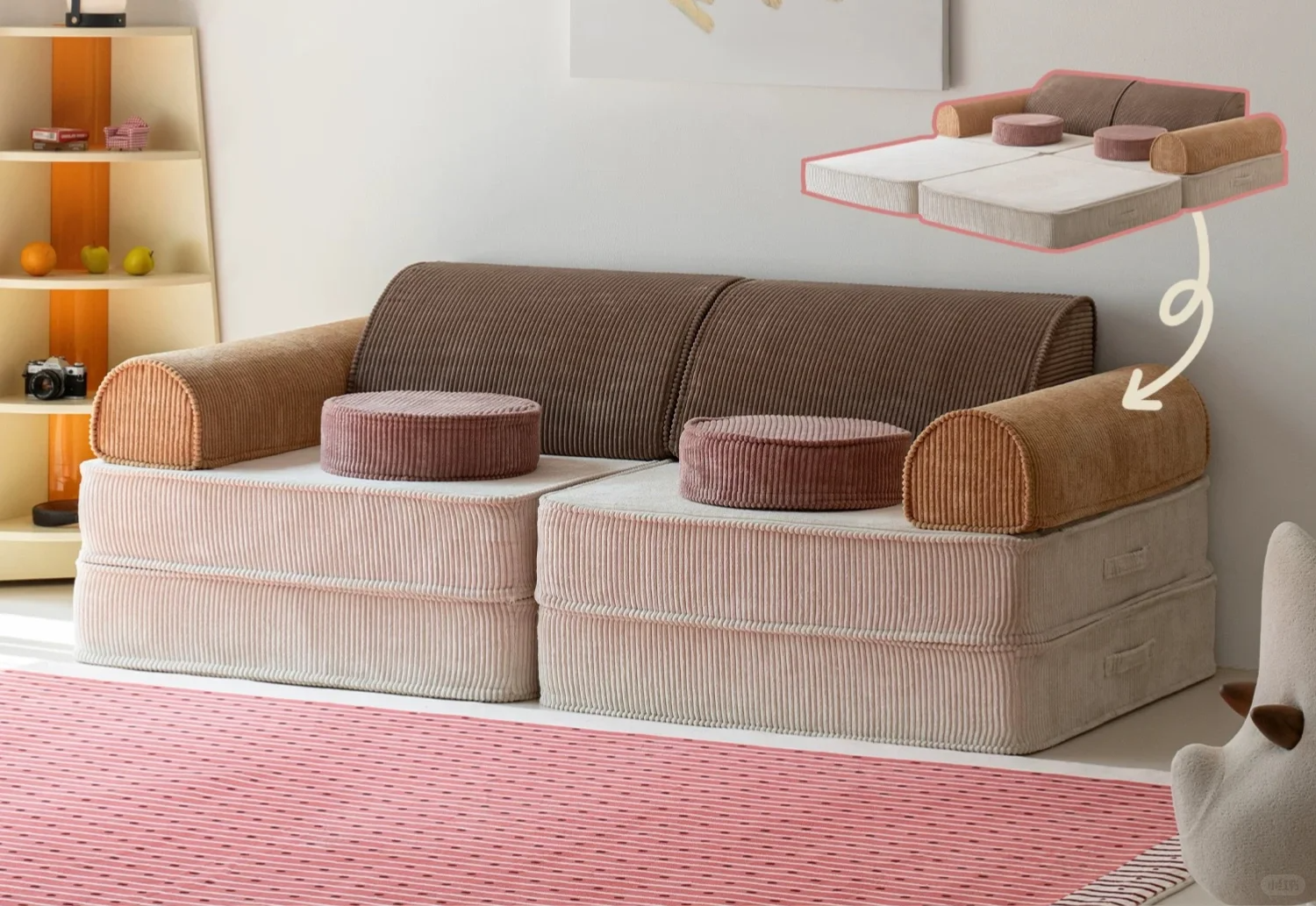
Release one assortment sheet with the model and revision, fabric code, color reference, sales role, planned channel, opening quantity, replenishment status and evidence still needed. Link every color to an approved swatch or upholstered sample and to the customer-facing image version.
Add the commercial conditions that can change the decision: minimum quantity, mixed-color allowance, lead-time basis, sample availability and whether the color is continuing, seasonal or subject to material confirmation. Missing conditions should remain visible instead of being replaced with assumptions.
After launch, update the record with actual inquiries, orders, returns and decisions. Preserve the original test period so a later buyer can distinguish a proven core color from an option that was only photographed or displayed.
| Record item | Required detail |
|---|---|
| Product identity | Model, configuration and revision |
| Material identity | Fabric supplier/code, color reference and approved sample |
| Sales role | Core stock, display traffic or made to order |
| Commercial scope | Channel, opening quantity, mixed-color rule, MOQ and lead-time basis |
| Customer content | Approved image, swatch wording and availability label |
| Review evidence | Inquiries, orders, cancellations, returns and decision date |
Practice source note. The ten sources use broad color names and room-style language. A released model, fabric code, sample and sales role convert that inconsistent language into an auditable assortment decision. Practice sources 01 to 10.
What should you send the factory for a first color-range review?
Send the selected sofa model, target channels, candidate fabric and color codes, proposed role for each color and opening quantities. Ask the supplier to confirm the sample, production status and commercial conditions for every option.
Download the color-role matrixPut it into practice with Yongform