
Compressed Sofa Target Prices: Compare Specification Trade-Offs
Fix the sellable configuration, compare fabric, filling, module and packaging alternatives, and make each specification trade-off visible before approving a target purchase price.

A target purchase price is useful only when everyone is discussing the same compressed sofa. A lower number may reflect a different fabric, fewer modules, a changed cushion or a narrower delivery scope. Before asking a supplier to reduce the quote, record the configuration that your customer will receive and the parts of the offer you intend to keep.
For brands and retail buying teams, the practical question is what each proposed saving changes. Compare a clearly identified alternative against an approved baseline, then decide whether it still delivers the intended product and customer experience. Treat every price effect as something the supplier must quote for that exact version.
Freeze the sellable configuration
Describe one complete sellable set. List the seat modules, arms, backrests, ottoman, loose cushions, legs and connecting parts that actually belong to it. Link the list to a layout and finished dimensions. Where a design has no legs or mechanical connectors, record that explicitly rather than carrying assumptions over from another construction.
Keep a reference sample or an approved specification revision alongside the list. A photograph of a large arrangement may include an extra seat or accessory that the quoted set excludes. The product name and overall silhouette cannot settle whether two offers contain the same parts.
Write down the customer-facing requirements that matter to this programme: the intended layout, usable seating, appearance, sitting experience, care instructions and delivery format. These are the constraints against which a proposed change will be reviewed. They are not universal requirements for every compressed sofa.
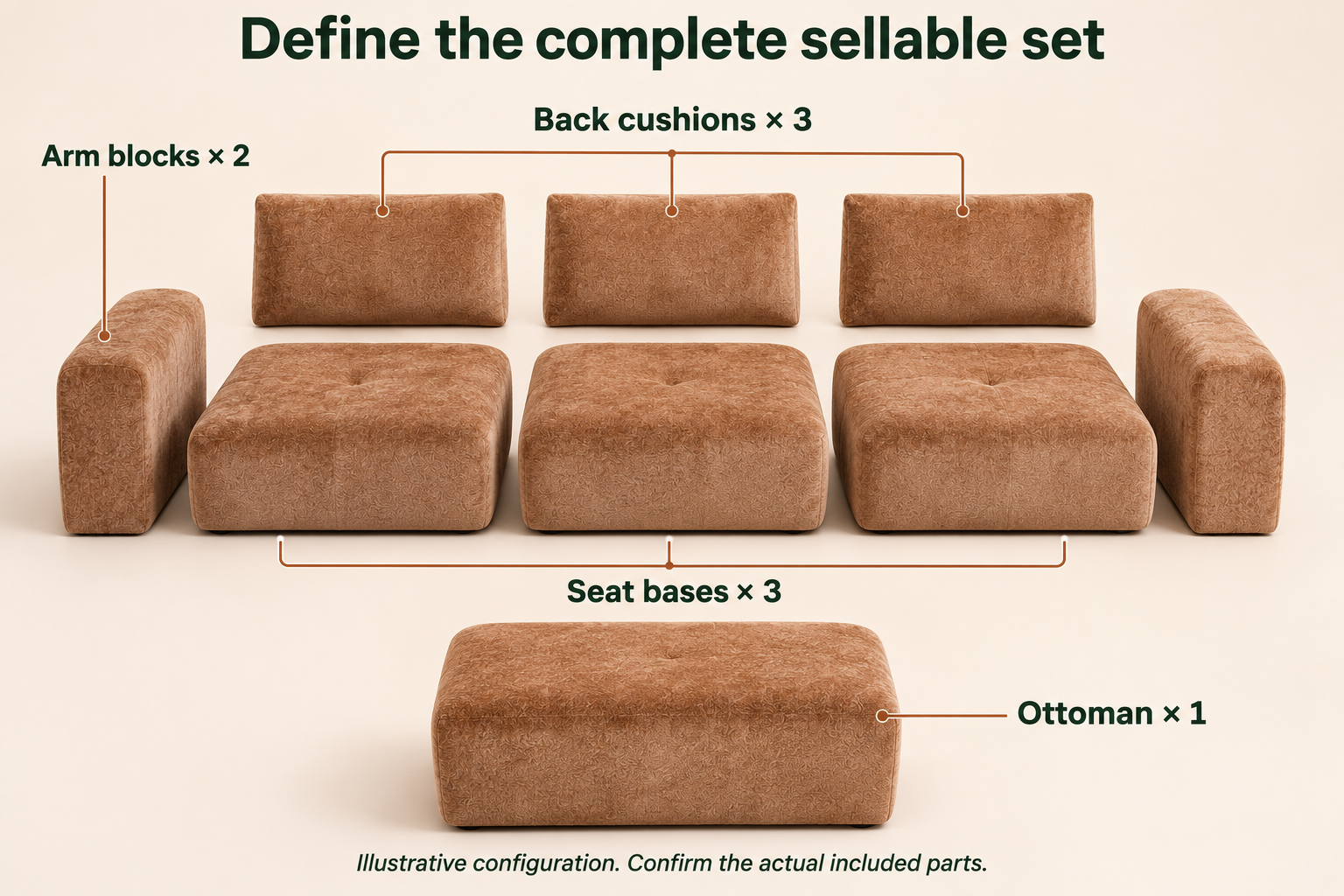
Define what the target price includes
Ask the supplier to identify the currency, order quantity, fabric or colour mix, delivery term and named place, quotation validity and included services. Keep these conditions consistent across the baseline and alternatives. Separate optional freight, installation, spare parts or sample charges when those items sit outside the product price.
Distinguish the product quote from the cost of delivering and supporting the order. A factory-gate figure and an offer including additional transport or services answer different questions. Compare them only after the scopes are reconciled. Do not fill missing charges with assumed industry averages.
If the supplier proposes a lower price against a larger order or a different colour mix, record that commercial condition in its own row. It is a different basis for the quote, not evidence that an unchanged specification has become cheaper at the original quantity.
Compare fabric alternatives on the finished module
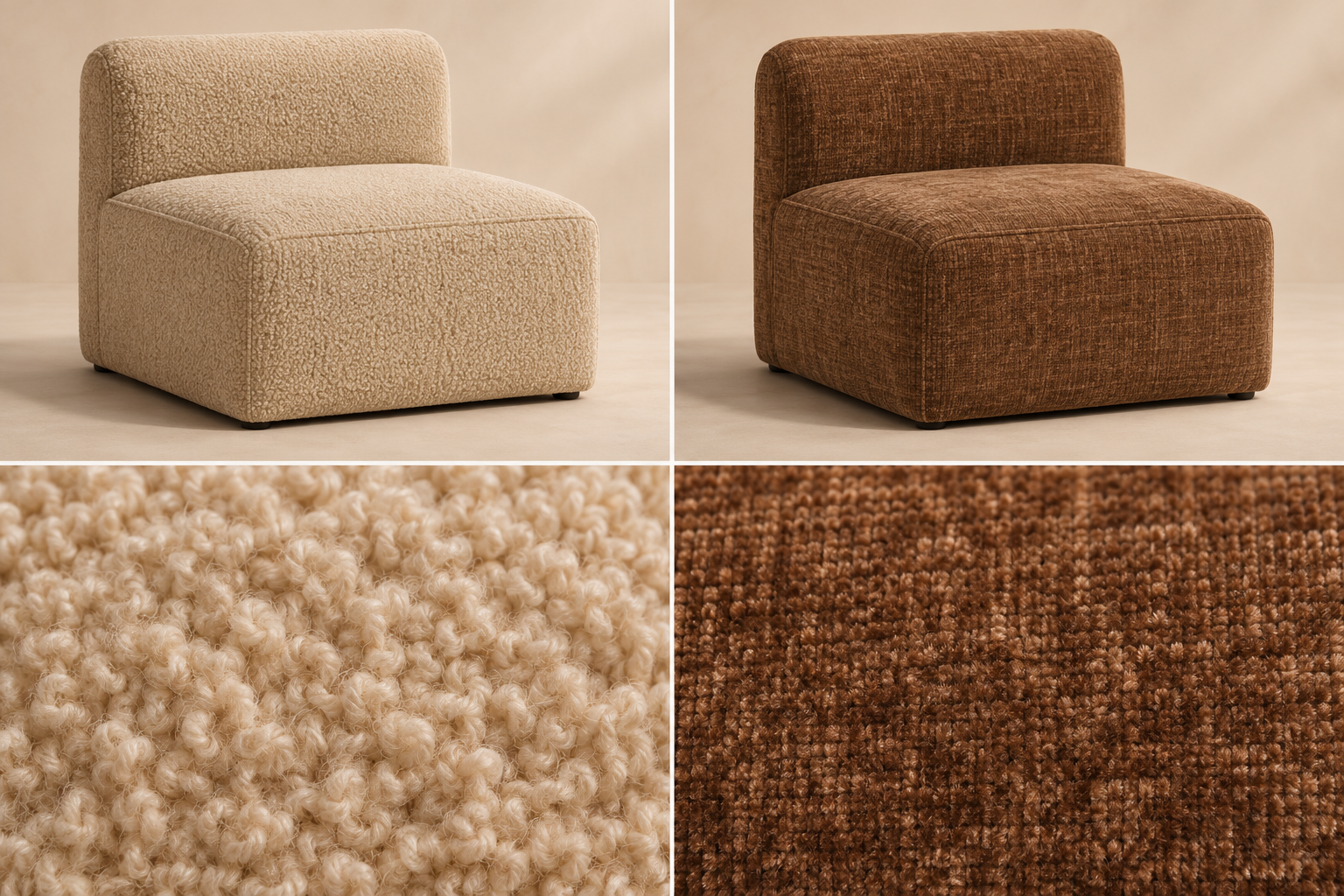
A fabric substitution is a useful option to request when the supplier can identify both the baseline and proposed fabric. Compare the code, colour reference, texture, weight or construction information where provided, coverage on each visible face and the applicable care instructions. A name such as boucle, velvet or easy-clean does not define an interchangeable material.
Inspect the alternative on a complete module or a representative upholstered component. Look at how the fabric follows the shape, how seams and joins appear and whether the intended finish is retained after the candidate has been compressed and opened under the supplier’s instructions. A small swatch cannot show every consequence of upholstering the finished form.
If a lower quote changes which faces receive the specified fabric or introduces a different backing or trim, identify those changes separately. Compare supporting information for any stain, abrasion, pet-use or washing claim that you plan to publish. Do not retain the original claim solely because the new fabric looks similar.
Review foam and seat feel separately
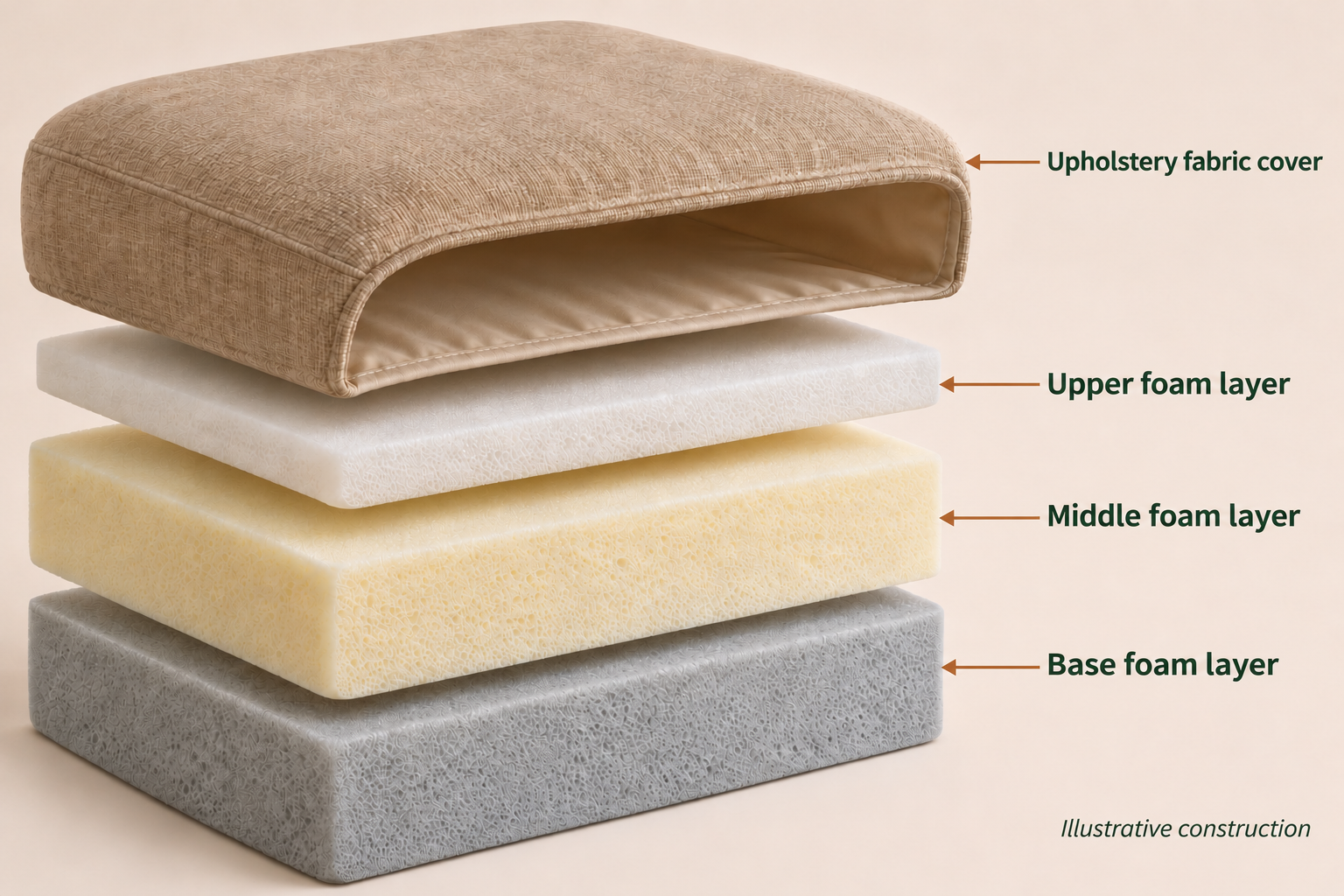
Ask which layer or component changes when a supplier offers a lower-cost filling. Record the material identity, layer arrangement, thickness and density information, together with the firmness information and test basis available for that material. Keep the baseline and alternative records separate even when both are described as high-density foam.
Density and firmness are different properties. PFA’s Foam Performance guidance explains that a high-density foam can be soft and a low-density foam can be firm. Density alone therefore cannot establish that a revised cushion will feel the same. Compare the complete seat, including its cover, geometry and support arrangement, against the approved reference.
For a compressed sofa, also review the proposed version after packing and recovery under the conditions agreed with the supplier. Record the packing identity, opening date, evaluation point and observed shape and sitting experience. A softer first impression or a rapid opening demonstration is not, by itself, an approval of durability or recovery across other storage conditions.
Treat module changes as a new offer
Removing an ottoman, loose cushion or seat module may be a legitimate way to create a more accessible offer. It also changes what the customer buys. Show the new component list, layout and finished dimensions, then give the revised set its own configuration identity.
Keep this separate from a like-for-like price reduction. A two-module set and a three-module set cannot be compared as the same sellable configuration even if both appear under the same collection name. Likewise, a different arm or backrest can change the usable seating and how the modules meet.
Do not silently remove a specified connector, supporting part or protective component to reach a target. Any change to the construction or intended assembly requires the appropriate supplier review and a revised sample where needed. The buying team should approve the actual new offer before it reaches a product listing.
Compare packaging without dropping the recovery review
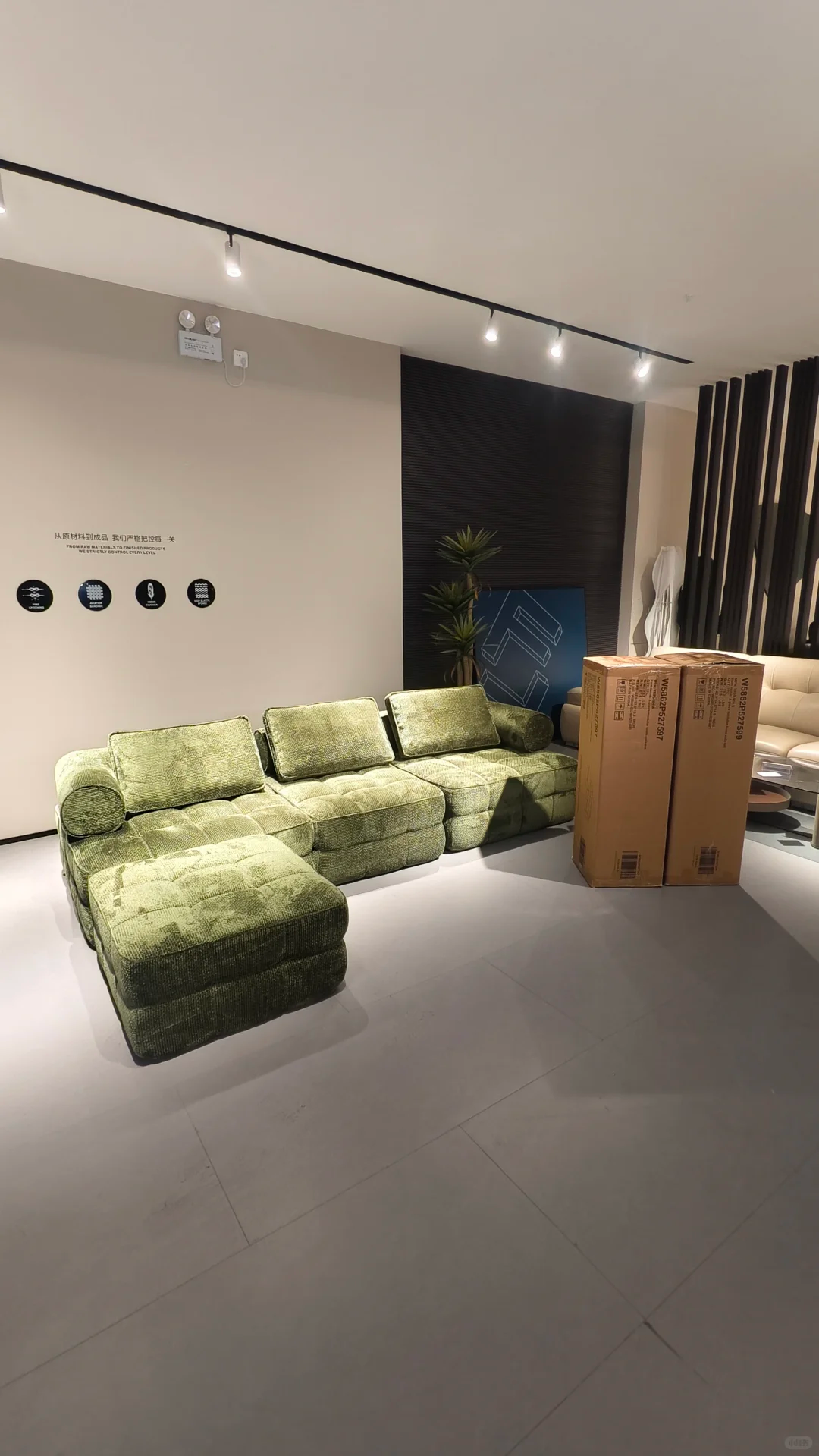
Request a packing record for the complete set, with every carton’s outer dimensions, gross mass, contents and module identity. Compare the total shipment scope and handling requirements. A smaller headline box is not a complete comparison if another carton, fitting pack or accessory has moved outside the offer.
If the proposed saving comes from a revised fold, compression arrangement, bag or carton, keep the finished product requirements visible. Ask for the evidence applicable to the exact proposed packing version and expected packed exposure, together with its opening and recovery instructions. Do not assume that a smaller carton will produce a particular freight saving or an unchanged recovered form.
A packaging option can be reviewed alongside a product option, but record the two decisions separately. Until the revised packing record and sample review are complete, mark that proposal pending rather than carrying a claimed saving into an approved comparison.
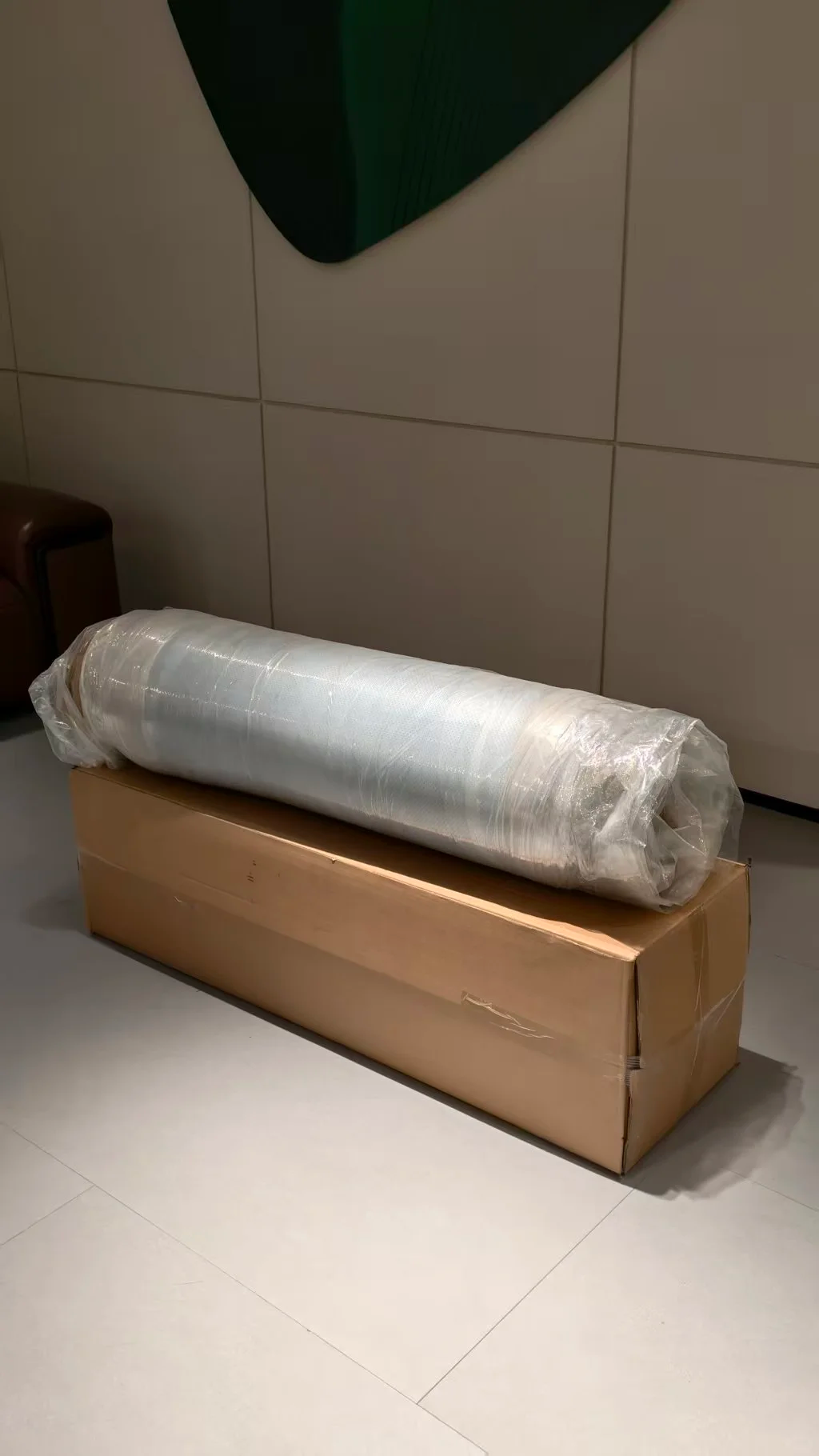
Use a specification trade off record
Start with one approved baseline and request a limited set of explicit alternatives. Ask the supplier to quote the baseline and each alternative under the same commercial conditions. Record the changed item, the requirements held constant, the sample or evidence still needed and the resulting decision. The comparison below illustrates the method; it contains no actual Hongkong Yonghua specifications or prices.
In the hypothetical record, the fabric option can enter a same-configuration comparison once its differences and evidence are clear. The reduced-module option needs a separate retail offer. The smaller-carton option remains open until packing and recovery evidence are reviewed. None of these outcomes tells you how much the supplier can save.
Where two changes are combined, first understand each one, then review the combined version. A fabric and filling change approved individually should not automatically inherit approval as a new upholstered and compression-packed assembly.
| Version and change | Keep or identify | Evidence still needed | Comparison outcome |
|---|---|---|---|
| R0 Baseline | Complete agreed set, fabric, filling, fittings and packing | Approved sample, specification and quotation basis | Reference for comparison |
| F1 Fabric alternative | Same set and geometry; name the new fabric and coverage | Upholstered sample, care/claim records and recovery review | Same-configuration alternative, subject to approval; not automatically equivalent |
| M1 Ottoman removed | New component list and revised layout | Revised finished dimensions, offer identity and included-parts list | Different sellable set; quote and list separately |
| P1 Smaller carton proposal | Same complete product; identify new packing version | All-carton record, handling and model-specific recovery evidence | Pending confirmation; do not assume a freight saving |
| F1 plus filling revision | Same component list, but fabric and filling both change | Review the combined upholstered and packed assembly | New approval required; do not combine earlier approvals automatically |
Baseline R0 and options F1, M1 and P1 are editorial identifiers, not Hongkong Yonghua model codes or quoted prices. Actual savings remain unquoted until the supplier confirms the named version and commercial basis.
Further technical reading
- Foam terminology: PFA Foam Performance
Request a Wholesale Model Shortlist
Share your intended sellable configuration, target purchase basis, quantities and the requirements you want to keep.
Request a Wholesale Model ShortlistPut it into practice with Hongkong Yonghua