
Velvet Sofa Modules: How Do You Approve the Pile Direction Before Cutting?
Prevent adjacent velvet sofa modules from looking unexpectedly light and dark by approving one pile-direction rule, one cutting map and one full-scale sample before production.
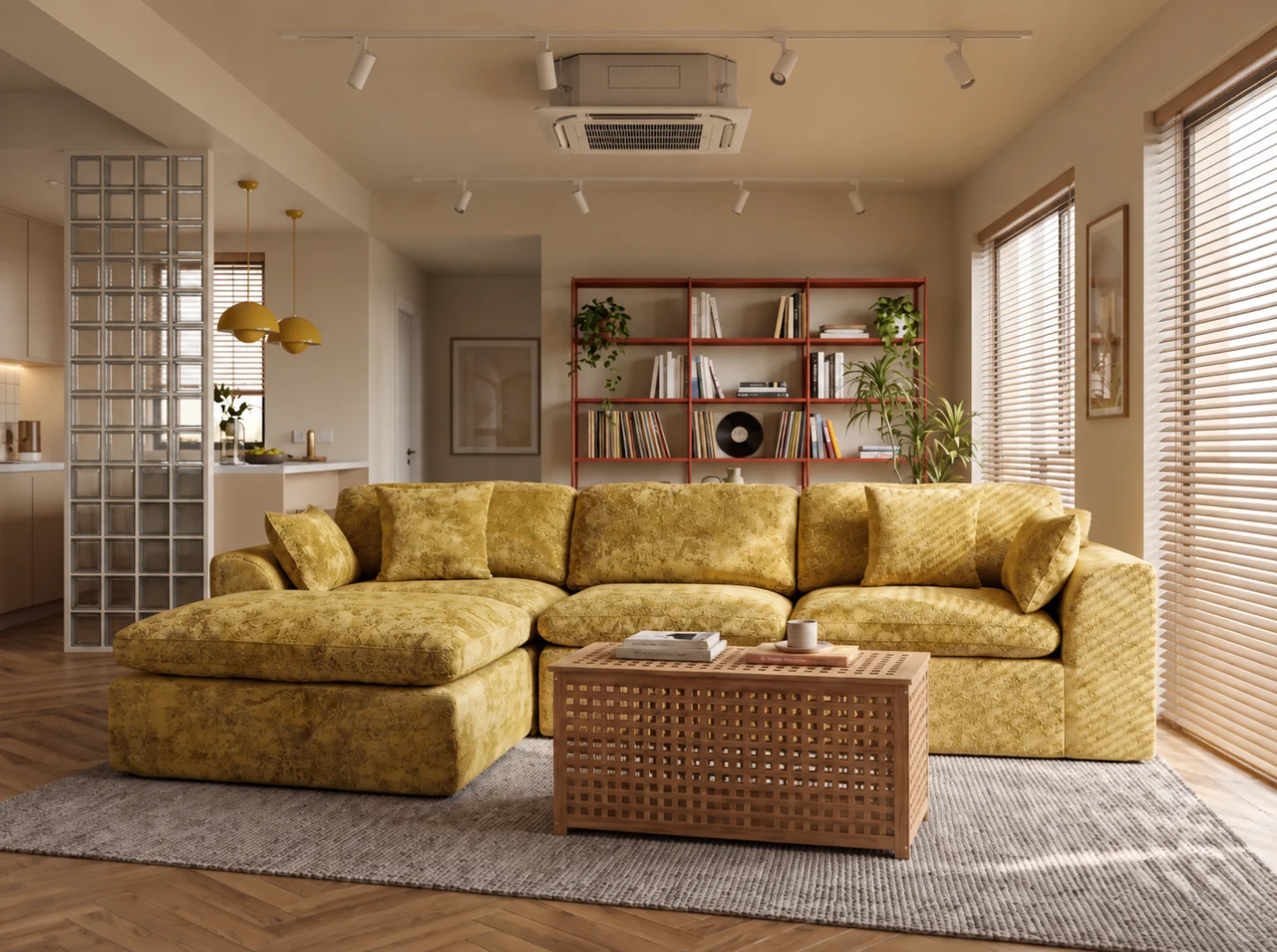
A velvet modular sofa can be made from the correct fabric and still look uneven after assembly. One seat may appear deep and saturated while the next looks pale or silvery. The cause can be the direction of the raised pile rather than a different dye colour.
The practical control point comes before cutting. The buyer and supplier should agree which way the pile runs on every visible face, show that rule with arrows on a module map, and approve joined sample modules under the same light and viewing direction.
This guide gives a purchasing and production workflow. It does not prescribe one universal up or down direction for every velvet. The fabric supplier and upholsterer must confirm the rule for the actual article, module geometry and intended appearance.
Why do velvet sofa modules look like different colours?
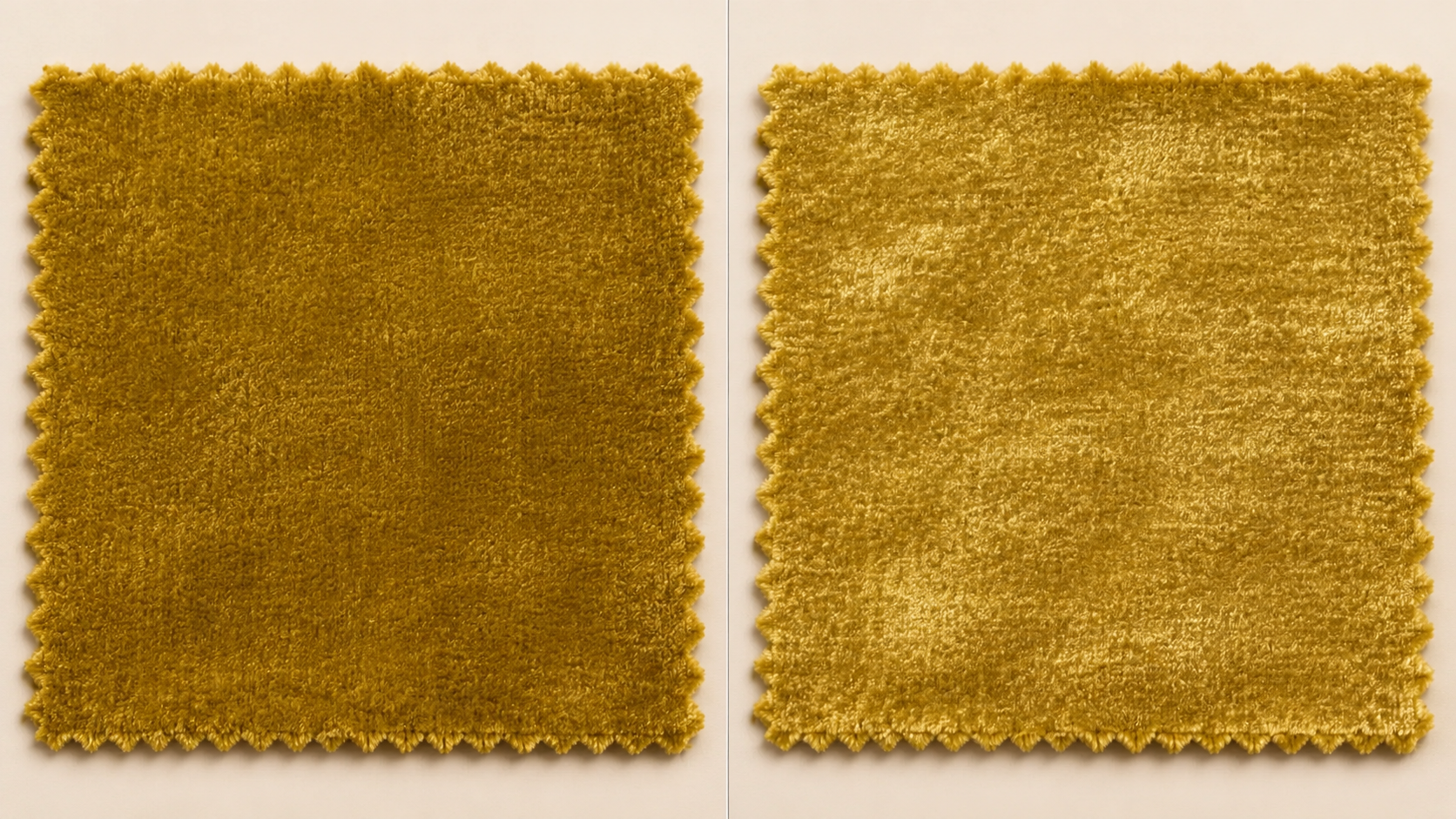
Velvet has a raised surface. When the pile leans toward or away from the viewer, it reflects light differently. Two panels cut from the same roll can therefore show different depth, sheen and apparent colour when their piles point in opposite directions.
A modular sofa makes the effect easier to notice because separate seats, arms and backs meet at straight seams. If one module is rotated during cutting, a full face can read as a different shade. The difference may become stronger when the customer moves, when daylight changes or when the sofa is photographed.
Do not label the issue a dye defect from one photograph. First compare the modules in the same place, under the same light, from the same viewing position. Brush the pile gently in the approved direction and repeat the comparison.
How can you identify the pile direction of upholstery velvet?
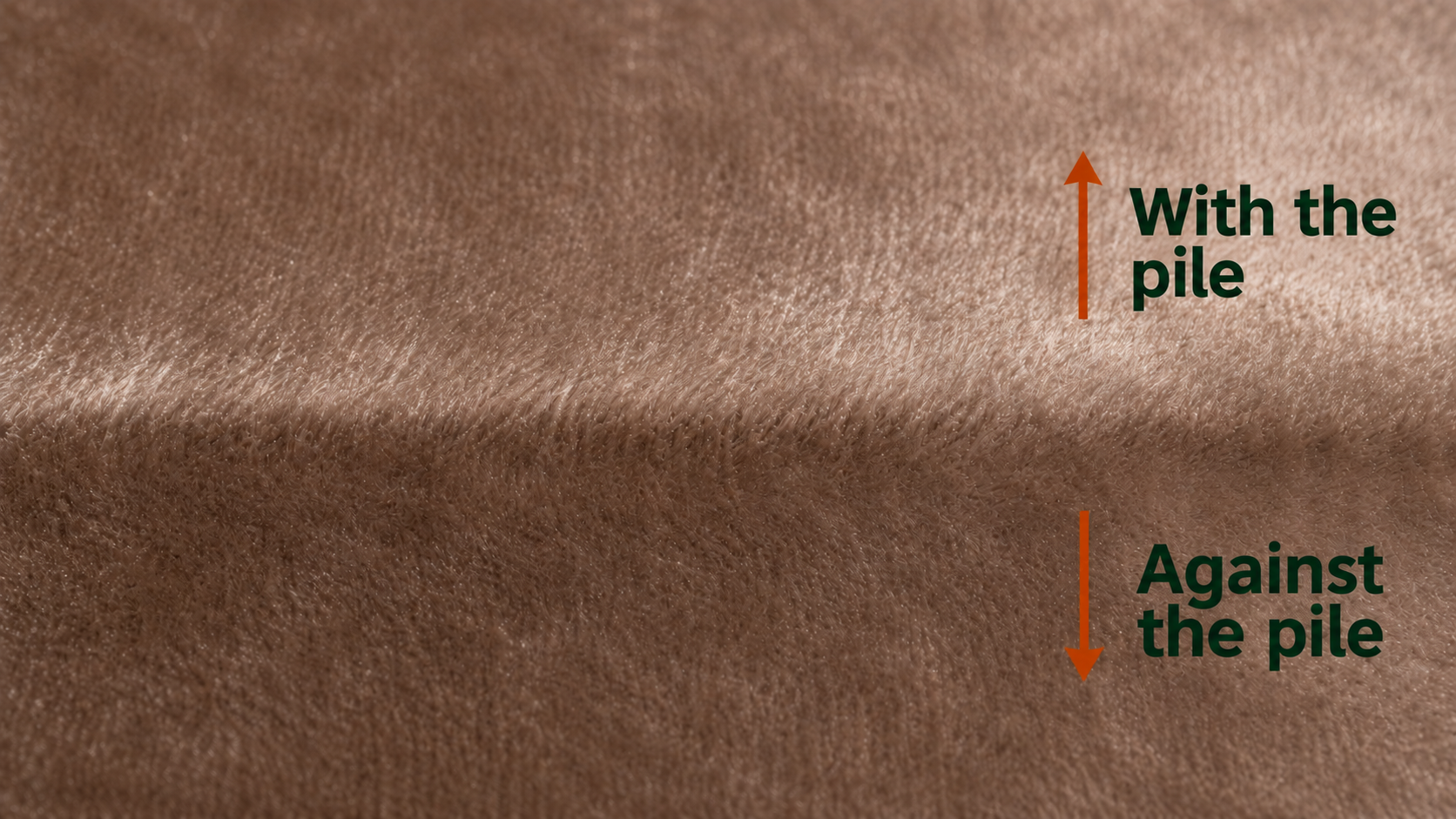
Take a clearly identified piece from the actual production roll. Run a hand lightly in both lengthwise directions. One direction normally feels smoother and the other offers more resistance. View both states under side light so the difference in sheen is easy to see.
Mark the result immediately. Draw a large arrow on the back of the test piece, write the roll number and fabric code, and state what the arrow means, for example “pile points toward the floor on the finished front face.” Do not use “up” alone because up can mean roll direction, pattern top or furniture top.
If the fabric appears non-directional, ask the mill to confirm that in writing and still perform a rotation test. Place two pieces side by side, rotate one 180 degrees and view them from the expected customer position. A visible change means the cutting plan must treat the fabric as directional.
Which velvet pile direction should a sofa use?
There is no safe universal answer for every velvet. Some upholstery guidance places the pile downward for a smooth, consistent furniture appearance. Other mills recommend a different orientation for particular cotton or blended velvets. The correct decision is the direction approved for the named fabric article and sofa design.
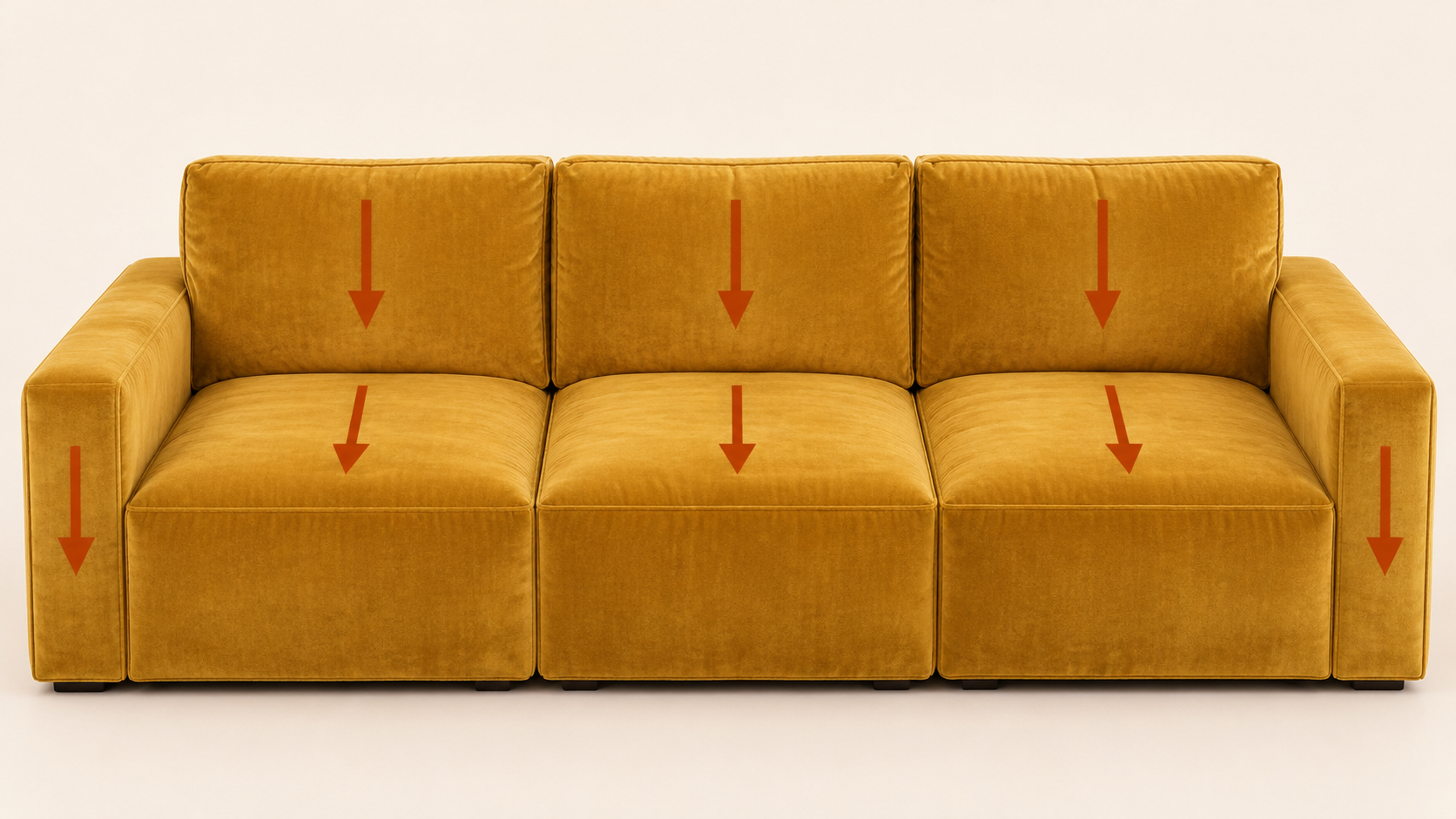
Choose one rule for all visible faces that are meant to read as one surface: seat tops, front rails, back fronts, arm tops and arm fronts. Use a face-level module drawing because a single module may turn through several planes. The arrow must describe the final viewing surface, not only the flat pattern piece.
An intentional contrast is possible, but it must be designed and sampled. If a designer wants an arm or piping to catch light differently, record it as an exception. An undocumented reversed piece is a production error, not a design feature.
How do you mark velvet pile direction before cutting sofa fabric?
Start with the roll map. Show the selvages, usable width, roll head and tail, then add one master pile arrow. Copy the same arrow to every pattern piece, digital marker and printed cutting sheet. A pattern piece without a direction arrow is not ready for velvet production.
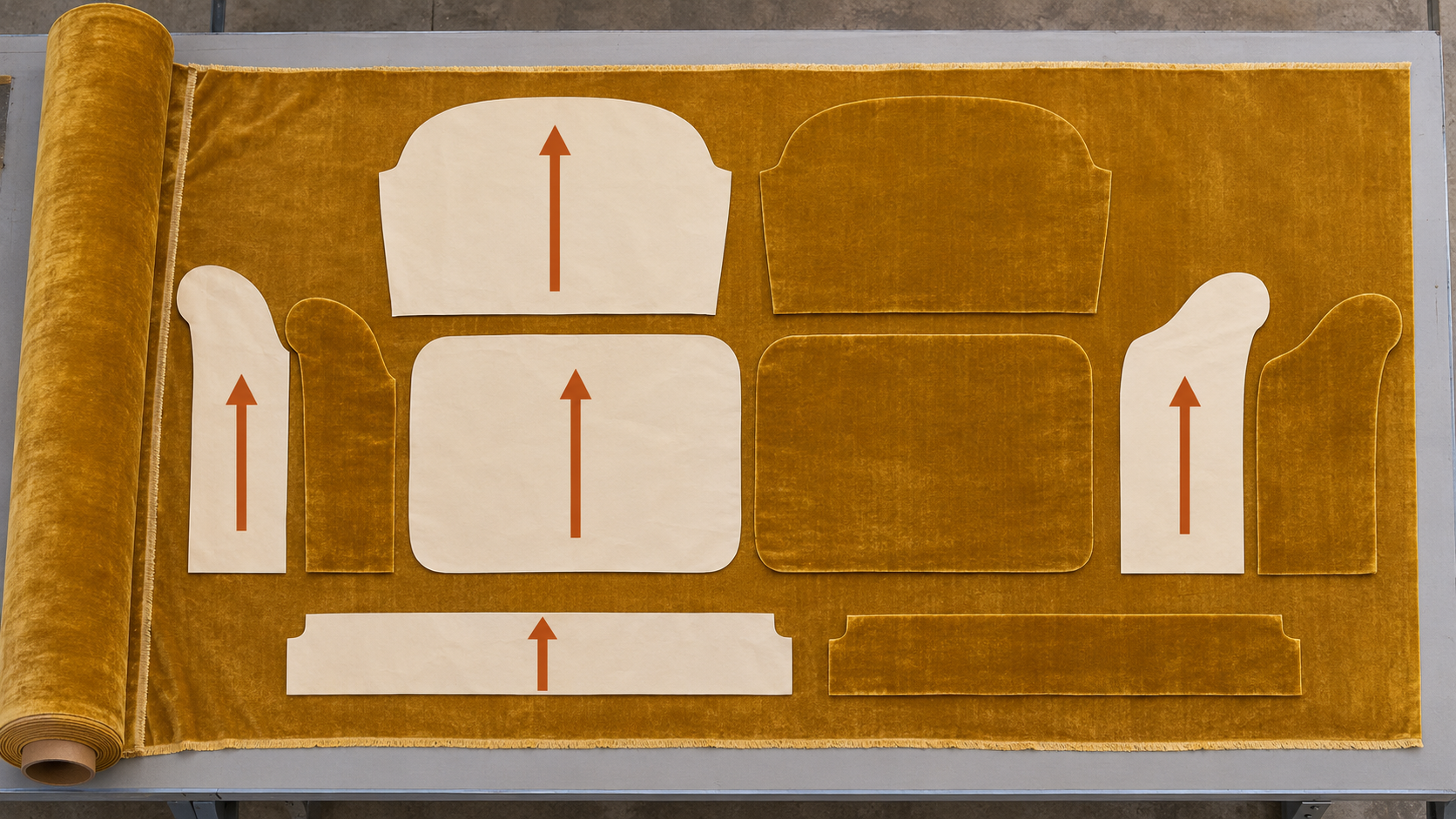
Carry the identity through the process. Bundle tickets should include the fabric code, colour, dye lot, roll number, module code, face name and pile arrow. When cut panels move to sewing or upholstery, the operator should be able to confirm direction without returning to the original marker.
Use plain language in the approval: “All visible faces follow arrow A.” Add a small diagram of the assembled sofa. This is clearer than a note such as “all pieces same way,” which can be misread when left and right modules are mirrored.
| Control point | Required identity | Approval evidence |
|---|---|---|
| Fabric roll | Supplier, article, colour, lot, roll and usable width | Labelled roll map and physical swatch |
| Pattern pieces | Module code, visible face and arrow meaning | Released marker with all arrows parallel |
| Cut bundles | Module, face, roll and arrow identity | Bundle ticket retained through upholstery |
| First-off sample | Joined modules, light and viewing position | Signed physical sample record before bulk cutting |
How should modular sofa panels be laid out across the fabric width?
List every visible upholstery face by module code before arranging patterns. A left module may include a seat top, front rail, inside arm, outside arm and back front. A middle module may have no arm panels but still needs the same seat and back direction as its neighbours.
Arrange all directional pieces with their arrows parallel to the approved roll arrow. Do not rotate a large seat or front rail 180 degrees merely to improve fabric utilisation. Record the usable width after excluding damaged edges, and include pattern matching, seams and quality zones in the consumption calculation.
When a sofa has several sellable layouts, check the direction at every possible module junction. A part that looks correct in one layout may meet a different neighbour in another. The cutting map should follow the module identity, not only one staged room configuration.
What should a velvet cutting approval sample show?
Approve at least two joined modules, not a loose swatch alone. The sample should include a real seam between adjacent seats or between a seat and arm, because the seam is where a direction error becomes visible. Use the actual fabric article, colour, backing and construction where possible.
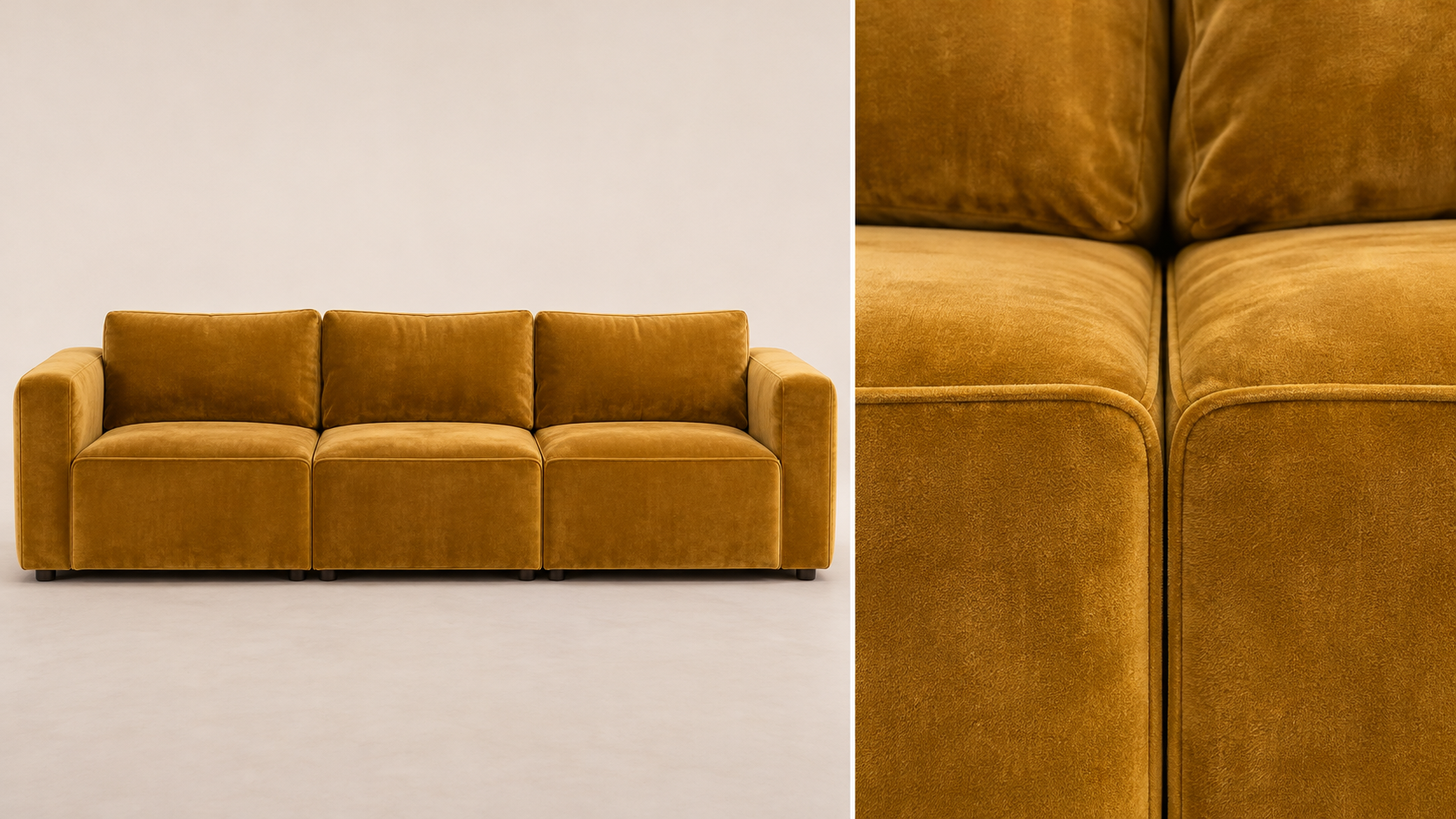
View the sample under agreed neutral light and under the market’s likely room light. Photograph it only as a record after the physical review. Save the lighting condition, camera position and viewing direction with the approval so later photos can be compared consistently.
The approval record should show the fabric code, colour, lot, roll, module codes, face arrows, sample date, decision, approver and any allowed variation. Release bulk cutting only after the physical sample and cutting map agree.
How can you separate pile direction from dye shade variation?
First perform a rotation test. If turning one panel 180 degrees changes the light-dark relationship, pile direction is involved. Then brush both panels in the same approved direction and compare again. Temporary pressure marks may also change as the pile recovers.
Next compare pieces from the same roll and dye lot under one controlled light. If correctly aligned pieces remain different, check roll position, side-to-side shade, damage, contamination and finishing variation. Keep questionable areas separate instead of mixing them across neighbouring modules.
A screen image cannot settle the question. Phone displays, white balance, filters and room lighting can shift the appearance. Use labelled physical swatches and joined samples as the decision evidence; use photographs to document, not replace, that evidence.
What should a velvet sofa purchase specification include?
Write the requirement around a named fabric, not the word velvet alone. Include the fabric supplier, article, colour, composition, backing, usable width, dye-lot rule and whether the pile is directional. Attach the approved swatch and the face-level arrow map.
State the cutting control: all listed visible faces use the approved direction; marker pieces may not be reversed; every bundle retains the fabric, roll, module and arrow identity. Define the first-off sample, lighting and approver required before bulk release.
Add a change rule. A new fabric lot, altered backing, revised module, different marker or substitute velvet requires review. If the supplier cannot verify the exact direction for a planned sofa, keep the order pending rather than converting visual similarity into an approval.
Technical verification references
Request Velvet Upholstery Options
Share the sofa layouts, module faces, target velvet article, colours and market lighting conditions. Ask Hongkong Yonghua for the available upholstery options, sample needs and cutting-direction evidence for the models under review.
Request Upholstery OptionsPut it into practice with Hongkong Yonghua