
Why 78% of Buyers Now Want a Sofa in a Box: A Retailer's Guide
Boxed sofas answer real buyer problems around access, delivery control, small-space living and modular choice. Retailers still need product-specific proof before turning that demand into a listing or a wholesale order.
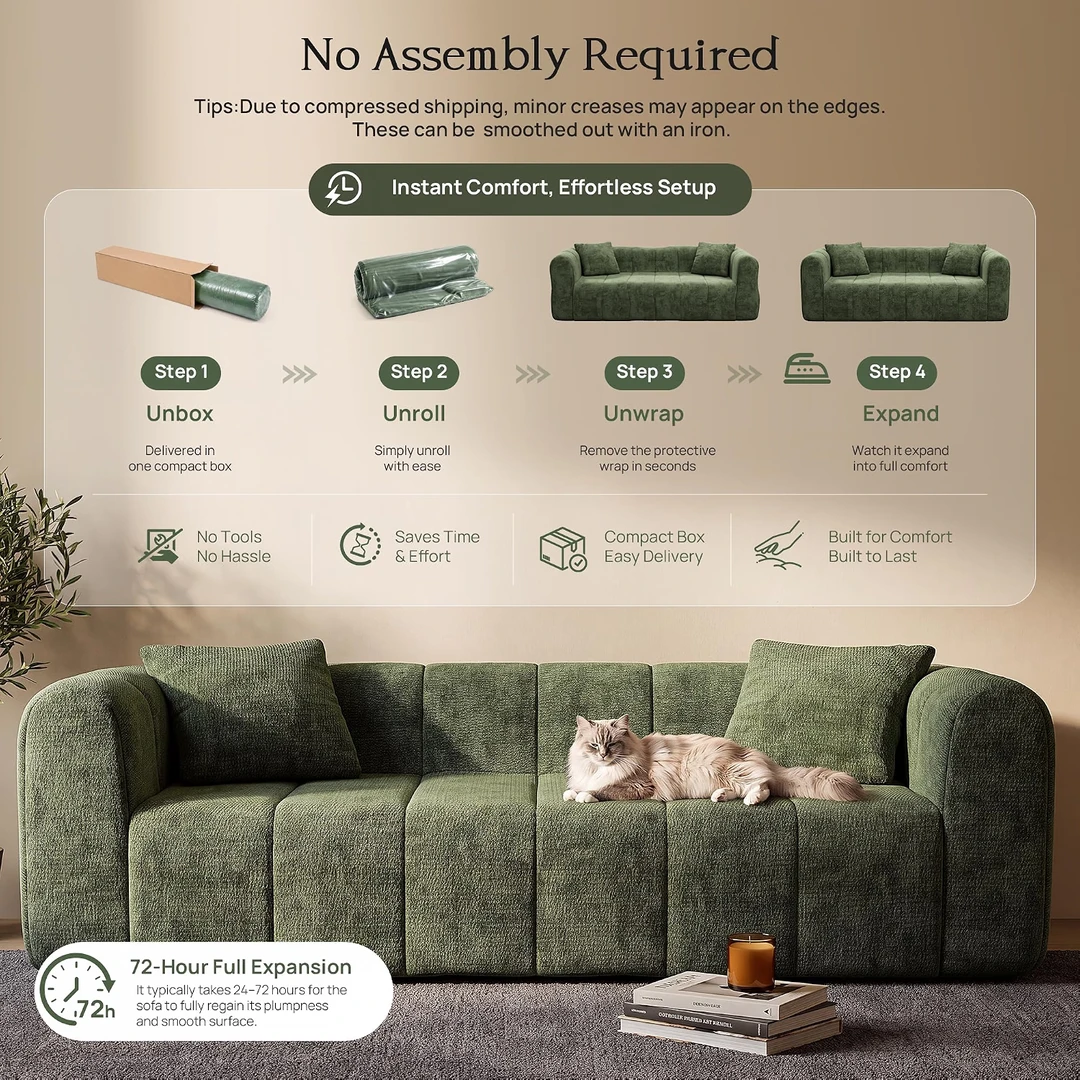
The 78% in this headline is a campaign framing supplied in the content brief, not a verified industry statistic. Until the original survey, sample and market are available, do not repeat it in sales decks as a measured share of all sofa buyers. The stronger retail case comes from observable demand signals: customers want furniture that can pass narrow access points, arrive on a predictable parcel-style schedule, expand inside the room and adapt to changing layouts.
A sofa in a box can serve those needs, but the phrase covers very different products. An all-foam sofa, a hybrid frame with compressed cushions and a flat-pack sofa with boxed hardware may all reach the customer in cartons. A retailer should therefore sell the verified delivery and recovery experience of one exact model—not the category label alone.
What does “sofa in a box” actually mean?
Use the term for the shipping format, then explain the construction separately. Record which upholstered parts are compressed, which rigid parts fold or detach, how many cartons make one sellable set and what the customer must do after opening. If a product needs assembly, say so before checkout; if it only needs time to recover, state the recovery checkpoints instead of calling it assembly-free.
Keep ‘boxed sofa’, ‘compressed sofa’, ‘modular sofa’ and ‘flat-pack sofa’ as related but distinct terms. A modular sofa is defined by its sections and approved combinations. A compressed sofa is defined by its packing state. One product can be both, but neither word proves the other.
Why are buyers choosing boxed delivery?
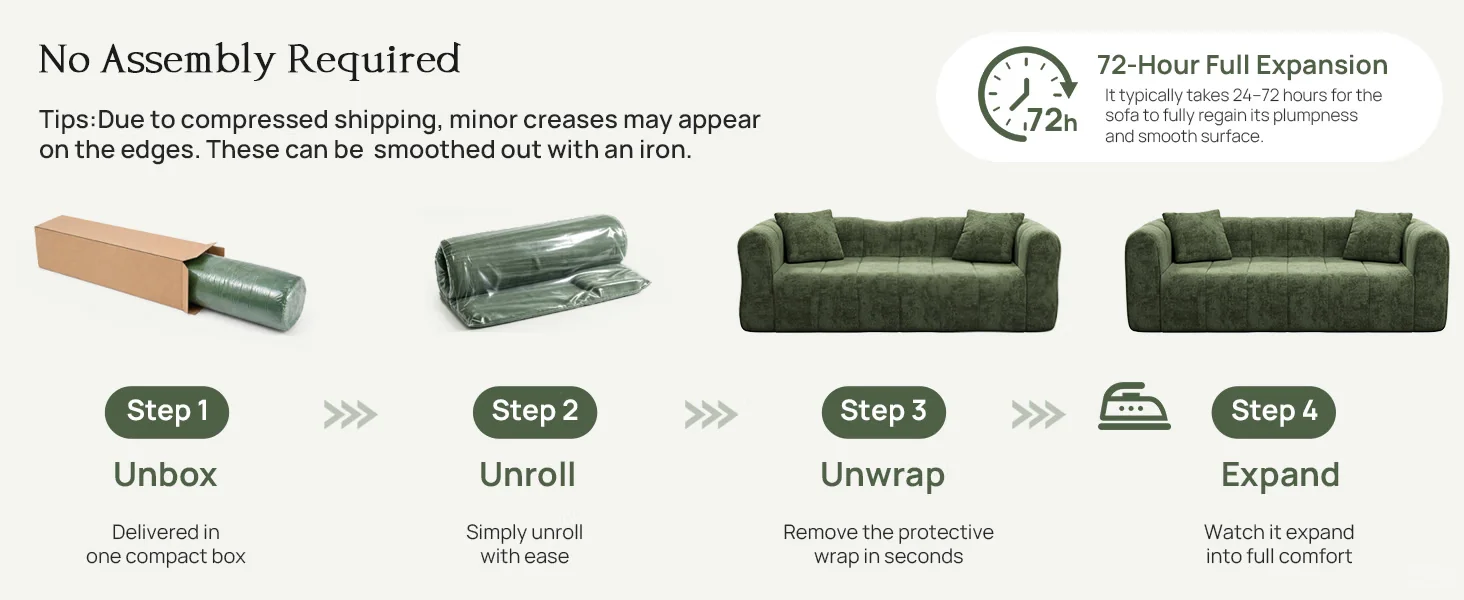
The first driver is access. A carton or separate module can often pass through lifts, stair turns and apartment doors that block a fully assembled sofa. The second is delivery control: parcel-style cartons can be easier to schedule and stage than one oversized finished piece, especially for renters, upper-floor homes and customers furnishing a room in phases.
The third driver is flexibility. Chinese social posts repeatedly present small rooms, modular layouts and later additions as purchase motivations. The useful retail translation is not ‘fits every home’; it is a list of approved layouts, recovered dimensions, carton dimensions and the exact modules included in each offer.
The fourth driver is confidence from demonstration. A convincing product page shows the sealed carton, the opening sequence, the recovering sofa and the finished room view. It also states what remains uncertain before recovery is complete. Buyers are not only purchasing a silhouette; they are purchasing a delivery process.
| Buyer signal | Retail evidence |
|---|---|
| Access | Carton size, module mass and the real carry-in route |
| Delivery control | Carton count, labels and what must arrive together |
| Small-space use | Recovered dimensions and approved layouts |
| Flexibility | Confirmed module codes, versions and connectors |
| Online confidence | Packing, opening, timed recovery and the finished sofa |
Practice source note. Sources 01–04 show small-space, compressed-delivery and reconfiguration language used by shoppers on Xiaohongshu. The article converts those themes into fields a retailer can verify.
Which shoppers are most likely to value a sofa in a box?
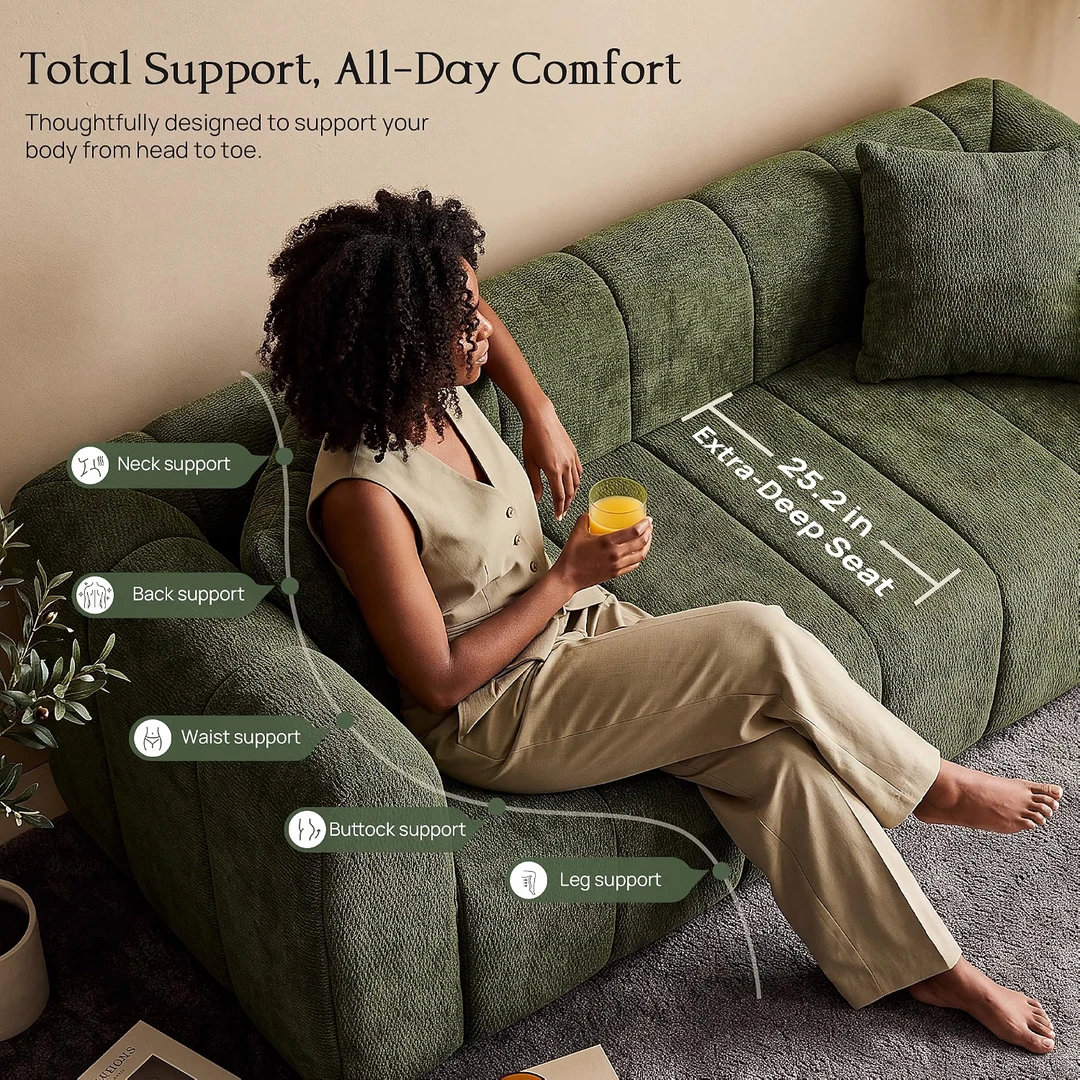
Small-space buyers care about usable width, access and whether an ottoman or armless module can move without replacing the whole set. Renters and frequent movers care about carton count, module mass and whether the sofa can be repacked or only moved in its recovered state. Online-first buyers care about clear dimensions, realistic colour, an understandable unboxing sequence and a return policy that recognises expansion.
Retailers should not turn these groups into promises that the product has not earned. A sofa that enters a narrow doorway may still be too heavy for one person. A modular-looking sofa may not accept future sections. A product that expands quickly may still need more time before its height, firmness and seam alignment are assessed.
Practice source note. Zhihu sources 05–07 discuss modularity, room size and access as buyer concerns. Their product opinions are not used as technical proof.
What should a retailer verify before listing a boxed sofa?
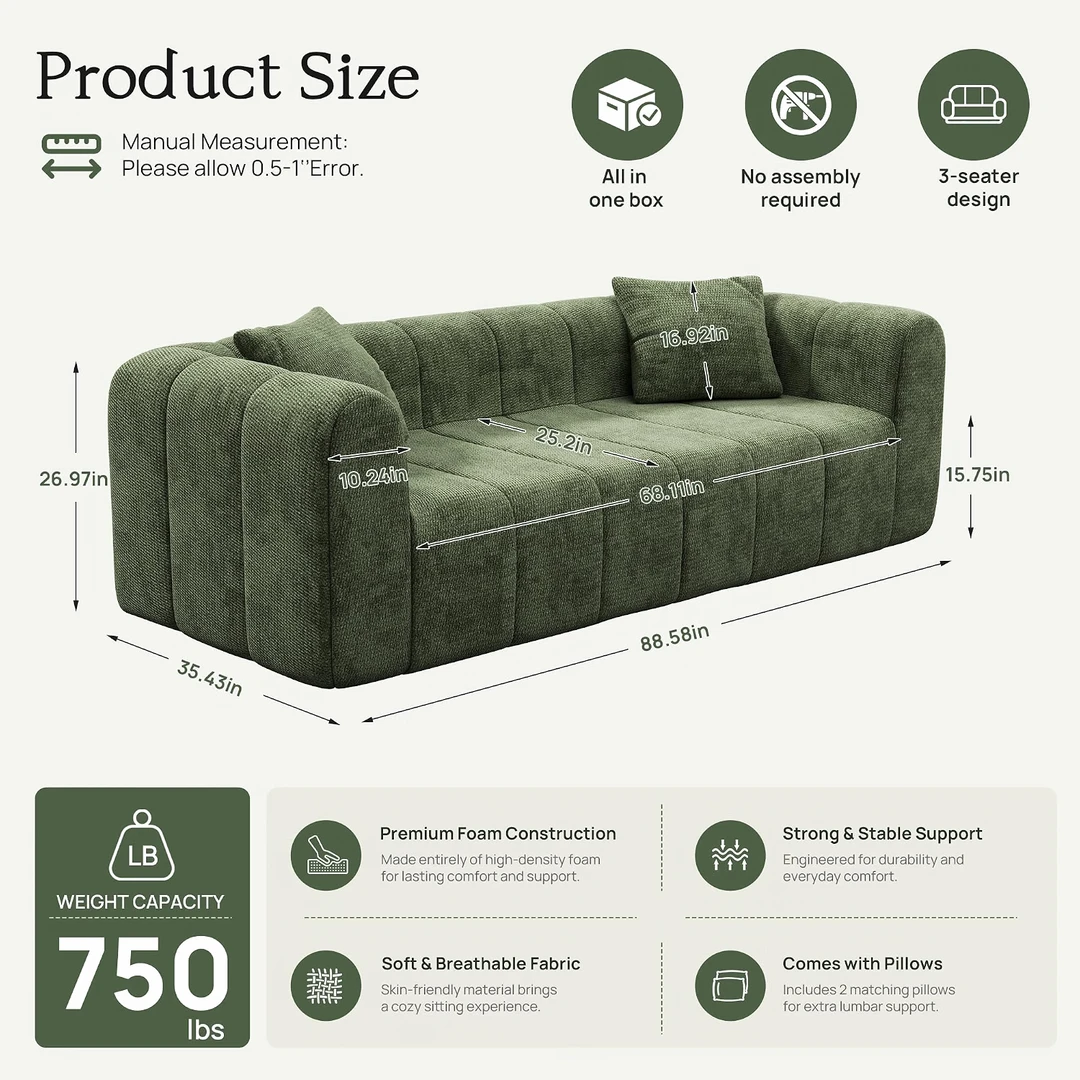
Start with one released configuration. Confirm the model and revision, module codes, finished dimensions, carton count, outer carton sizes, gross mass, packed age, compression method, opening instructions and the point at which the sofa can be judged. Ask for photographs or video of the actual sample before packing, during packing, immediately after opening and after the agreed recovery period.
Then verify the customer-facing risks: carry-in route, cutting hazards, expanding parts, loose hardware, fabric creasing, module alignment, odour or ventilation guidance, missing-part traceability and the return condition. Do not publish a universal recovery time if the evidence belongs to one sample, foam system or packed duration.
| Record | What the retailer needs | What it prevents |
|---|---|---|
| Configuration | Set code, modules, direction, cover and revision | False compatibility and incomplete sets |
| Finished product | Recovered dimensions, sit-test state and sample photos | Judging a compressed silhouette as the final product |
| Cartons | Count, labels, outer sizes, gross mass and contents | Freight and receiving surprises |
| Opening | Tools, safety steps, recovery checkpoints and support route | Damage, premature claims and avoidable returns |
| After-sales | Lot traceability, parts list, evidence request and remedy owner | Untraceable missing-part and recovery cases |
How should the product page explain the trade-offs?
Lead with the problem solved, then show the conditions. ‘Ships in three labelled cartons and is assembled in the destination room’ is more useful than ‘easy delivery’. ‘Recovered dimensions measured after the stated conditioning period’ is more defensible than ‘pops up instantly’. ‘Approved as a straight three-seat set and an L-shape with module C’ is clearer than ‘infinite combinations’.
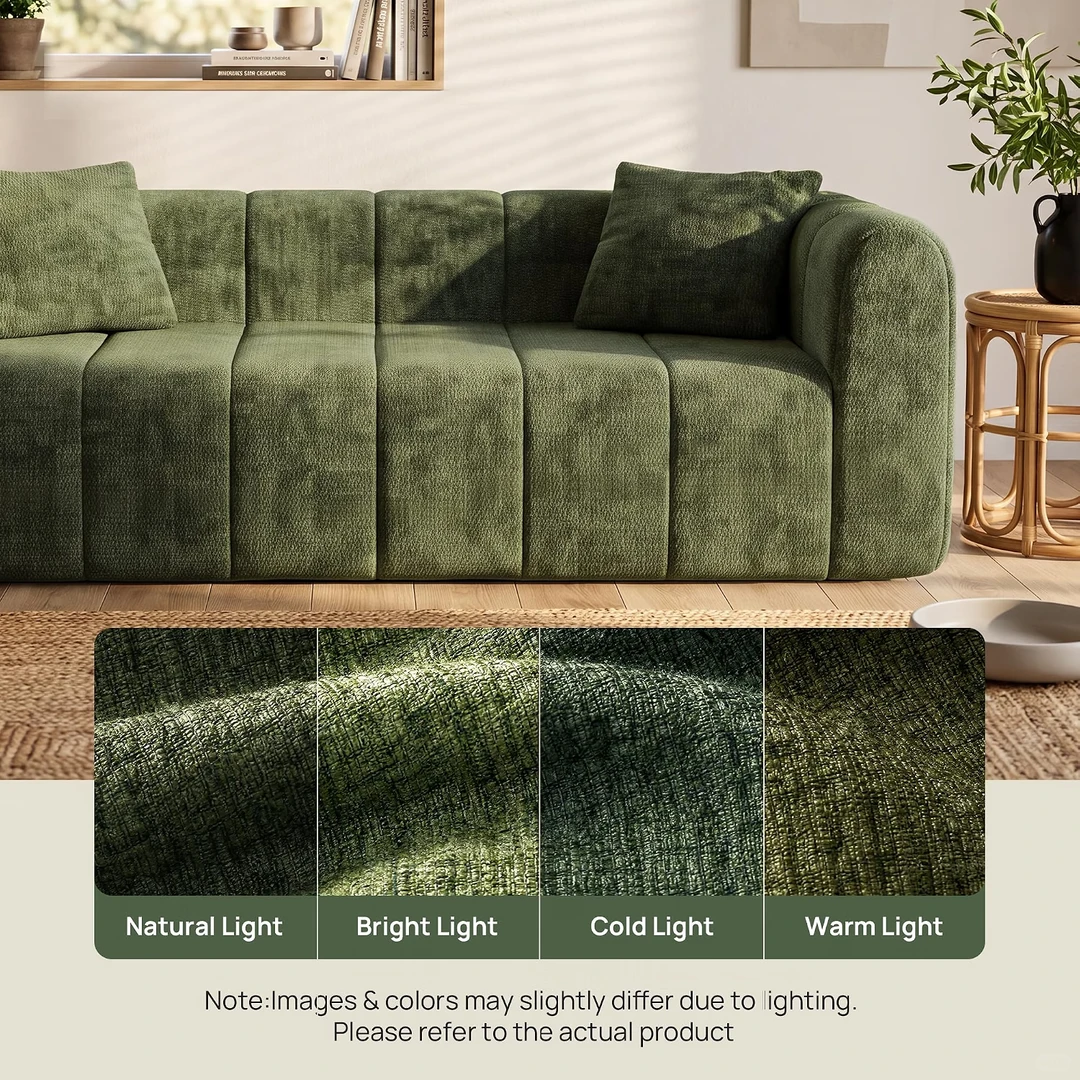
Use a matched evidence sequence: carton and label, contents laid out, opening steps, timed recovery views, finished dimensions and a real sit test. Keep room styling secondary. The buyer needs to understand what arrives, what changes after opening and what the finished product will be judged against.
Practice source note. WeChat sources 08–10 show how price, small footprint and multi-use claims spread in retail content. The article replaces broad claims with configuration-specific evidence.
How should a retailer plan the launch and inventory?
Choose a small number of sellable configurations first. Map every set to its modules and cartons, then calculate demand at module level. Separate core colours, display colours and made-to-order options so opening stock does not become a collection of attractive but incompatible pieces.
Run one complete inbound-to-customer trial before scaling: receive the cartons, scan the labels, move them through the actual doorway, open them using the customer instructions, record recovery and assemble the final layout. Use the failures from that trial to update the product page, packing list, customer support script and replacement-part stock.
What belongs in a wholesale boxed-sofa inquiry?
Send the target market, sellable layouts, quantity by colour, required delivery channel, access constraints and the claims you intend to publish. Ask the supplier to return the exact module list, finished and packed dimensions, carton mapping, gross masses, compression and recovery evidence, assembly steps, hardware list, labelling plan, sample terms, MOQ, lead time and replacement-part policy.
Treat the quote as comparable only when the scope matches. A lower price can reflect a different foam system, fewer modules, a smaller recovered size, different packaging, missing accessories or reduced inspection evidence. Release the order against one revision-controlled specification rather than a mood image or a social post.

What should you send before requesting boxed-sofa pricing?
Send the sellable layouts, target market, quantity by colour, delivery channel and intended claims. Ask the supplier to return the exact configuration, module, carton, recovery and sample-evidence fields for a like-for-like review.
Request Boxed Sofa Wholesale PricingPut it into practice with Yongform