
How to Calculate Carton CBM for a Compressed Sofa
Calculate compressed-sofa CBM across every outer carton, compare a sealed box with a swollen one and convert a per-set claim into shipment volume.
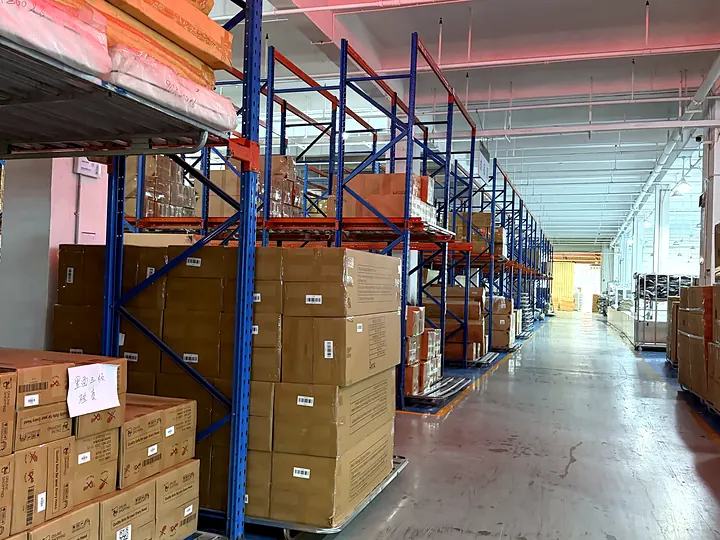
Carton CBM is the external volume in cubic metres. Measure each sealed carton at its widest points, convert each dimension to metres, multiply length by width by height, then add every carton required for one sellable sofa. A bag measurement leaves the freight quote incomplete.
Calculate from a complete set
Consider a two-carton sofa. The first box is 100 × 60 × 40 cm, or 0.240 m³. The second is 80 × 50 × 30 cm, or 0.120 m³. Together they occupy 0.360 m³ per set before pallets or loading gaps. For 100 complete sets the carton total is 36.0 m³. Keep the unrounded values until the order total has been calculated.
Resolve the denominator in a quoted claim
Ask whether a published volume refers to a single seat, the longest carton, one sofa with accessories or the whole pallet. Social posts cite three-seaters with different packed volumes. Their seat counts alone cannot establish equivalent construction, size or packaging. A supplier quoting only the largest box may omit a separate arm or cushion case.
Measure the condition that ships
Take external measurements after the agreed holding period. A carton swelling from 40 to 43 cm on the first box changes its volume from 0.240 to 0.258 m³, adding 1.8 m³ across 100 sets. Photograph the maximum bulge with a straightedge, weigh each carton and give the forwarder the palletised dimensions when that is the billed unit.
Where the product claim can go wrong at the pallet stage
Take ten of the example two-carton sets. Their individual carton volumes sum to 3.60 m³. If a carrier instead invoices two finished pallets that each measure 1.20 × 1.00 × 1.70 m including the pallet base, the quoted transport envelope becomes 4.08 m³. The difference is 0.48 m³, or about 13.3% above the carton sum. These pallet dimensions are illustrative. The correct quote basis is the one the service actually measures. Do not add pallet volume again if the forwarder has already priced the finished pallets.
Reconcile a supplier quote before approving artwork
Ask the factory for one line per carton type with quantity, dimensions and unit convention. Recompute the total with raw measurements, then compare it with the outer shipping label and the retail product sheet. A carton measuring 800 mm sometimes appears as “80” on a spreadsheet with no unit. Writing the reference length as 0.80 m in the calculation prevents a cubic error. If a purchasing sheet needs a rounded headline value, keep the component calculations attached so logistics can rerate a later height revision.
| Item | Reading |
|---|---|
| Carton A | 1.00 × 0.60 × 0.40 = 0.240 m³ |
| Carton B | 0.80 × 0.50 × 0.30 = 0.120 m³ |
| Complete sofa | 0.360 m³ before palletisation |
Do the decimal places in a supplier post settle the freight calculation?
Two supplier posts online describe three-seat models at 0.3 and 0.4 cubic metres. Their descriptions do not establish the same finished dimensions or carton boundary. Request the packing list for each proposed set before treating the difference as a freight saving.
What to request from the supplier
Request a packing list with outer dimensions, gross mass, carton count per sellable set and the measured CBM of each box.
Download: Carton measurement registerSources and further reading
Put it into practice with Hongkong Yonghua
